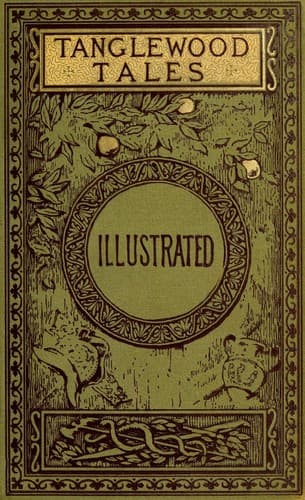
A Wonder Book and Tanglewood Tales, for Girls and BoysHawthorne, Nathaniel
ReligionComparative
A Wonder Book and Tanglewood Tales, for Girls and Boys
Hawthorne, Nathaniel
Mythology, Greek; Mythology, Greek -- Juvenile literature
After these memorable deeds, Theseus heard of an enormous sow, which ran
wild, and was the terror of all the farmers round about; and, as he did
not consider himself above doing any good thing that came in his way, he
killed this monstrous creature, and gave the carcass to the poor people
for bacon. The great sow had been an awful beast, while ramping about
the woods and fields, but was a pleasant object enough when cut up into
joints, and smoking on I know not how many dinner tables.
Thus, by the time he had reached his journey's end, Theseus had done
many valiant deeds with his father's golden-hilted sword, and had gained
the renown of being one of the bravest young men of the day. His fame
travelled faster than he did, and reached Athens before him. As he
entered the city, he heard the inhabitants talking at the
street-corners, and saying that Hercules was brave, and Jason too, and
Castor and Pollux likewise, but that Theseus, the son of their own king,
would turn out as great a hero as the best of them. Theseus took longer
strides on hearing this, and fancied himself sure of a magnificent
reception at his father's court, since he came hither with Fame to blow
her trumpet before him, and cry to King AEgeus, "Behold your son!"
He little suspected, innocent youth that he was, that here, in this
very Athens, where his father reigned, a greater danger awaited him than
any which he had encountered on the road. Yet this was the truth. You
must understand that the father of Theseus, though not very old in
years, was almost worn out with the cares of government, and had thus
grown aged before his time. His nephews, not expecting him to live a
very great while, intended to get all the power of the kingdom into
their own hands. But when they heard that Theseus had arrived in Athens,
and learned what a gallant young man he was, they saw that he would not
be at all the kind of person to let them steal away his father's crown
and sceptre, which ought to be his own by right of inheritance. Thus
these bad-hearted nephews of King AEgeus, who were the own cousins of
Theseus, at once became his enemies. A still more dangerous enemy was
Medea, the wicked enchantress; for she was now the king's wife, and
wanted to give the kingdom to her son Medus, instead of letting it be
given to the son of AEthra, whom she hated.
Public-domain text, read in full here on John Shaqi.
Reviews
Reviews
No reviews yet
Be the first to share your thoughts on this work.
Elsewhere in the archive
Join the Discussion
Join the discussion
Sign in to leave a comment or review.
Sign InorCreate an account