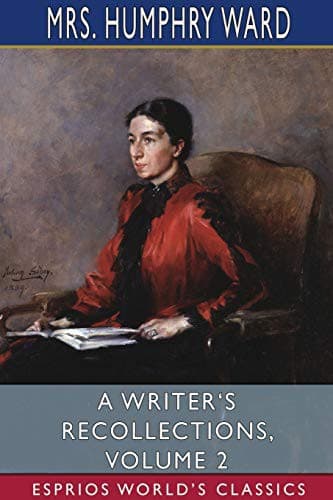
A Writer's Recollections — Volume 2Ward, Humphry, Mrs.
General
A Writer's Recollections — Volume 2
Ward, Humphry, Mrs.
Novelists, English -- 19th century -- Biography; Novelists, English -- 20th century -- Biography; Ward, Humphry, Mrs., 1851-1920
are admitted by it to a world of beauty or romance or humor that without
it we should not know; and with the thing gained goes, as in
Alpine-climbing, the pleasure of the effort itself.
Especially is this the case in poetry, where the artist's thought
fashions for itself a manner more intimate and personal than in prose.
George Meredith's poetry is still only the possession of a minority,
even among those who form the poetic audience of a generation. There are
many of us who have wanted much help, in regard to it, from others--the
young and ardent--who are the natural initiates, the "Mystae" of the
poetic world. But once let the strange and poignant magic of it, its
music in discord, its sharp sweetness, touch the inward
ear--thenceforward we shall follow its piping.
Let me record another regret for another lost opportunity. In spite of
common friends, and worlds that might have met, I never saw Robert Louis
Stevenson--the writer who more, perhaps, than any other of his
generation touched the feeling and won the affection of his time. And
that by a double spell--of the life lived and the books written.
Stevenson's hold both upon his contemporaries, and those who since his
death have had only the printed word of his letters and tales whereby to
approach him, has not been without some points of likeness--amid great
difference--to the hold of the Brontës on their day and ours. The sense
of an unsurpassable courage--against great odds--has been the same in
both cases; and a great tenderness in the public mind for work so
gallant, so defiant of ill fortune, so loyal to its own aims. In
Stevenson's case, quite apart from the claims of his work as literature,
there was also an added element which, with all their genius, the
Brontës did not possess--the element of charm, the _petit
carillon,_ to which Renan attributed his own success in literature:
undefinable, always, this last!--but supreme.[1] There is scarcely a
letter of Stevenson's that is without it, it plays about the slender
volumes of essays or of travel that we know so well; but it is present
not only in the lighter books and tales, not only in the enchanting
fairy-tale, "Prince Otto," but in his most tragic, or his most
intellectual work--in the fragment "Weir of Hermiston," or in that fine
piece of penetrating psychology and admirable narrative, _The Master
of Ballantrae_. It may, I think, be argued whether in the far future
Stevenson will be more widely and actively remembered--whether he will
enter into the daily pleasure of those who love literature--more as a
letter-writer, or more as a writer of fiction. Whether, in other words,
his own character and personality will not prove the enduring thing,
rather than the characters he created. The volumes of letters, with
their wonderful range and variety, their humor, their bravery, their
_vision_--whether of persons or scenes--already mean to some of us
more than his stories, dear to us as these are.
Public-domain text, read in full here on John Shaqi.
Reviews
Reviews
No reviews yet
Be the first to share your thoughts on this work.
Elsewhere in the archive
Join the Discussion
Join the discussion
Sign in to leave a comment or review.
Sign InorCreate an account