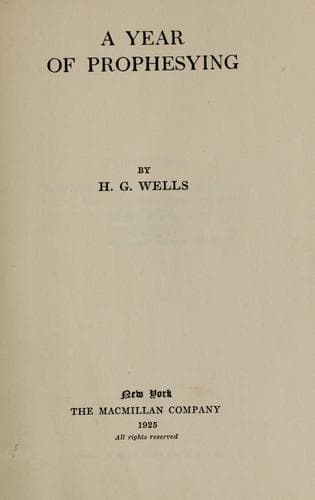
A year of prophesyingWells, H. G. (Herbert George)
History
A year of prophesying
Wells, H. G. (Herbert George)
Civilization, Modern -- 20th century; Europe -- History -- 20th century; Great Britain -- History -- 20th century
Implicit behind and beyond all these writings there is faith in a great
“outside.” I do believe there is a better life for such creatures as
we are, and betterment for our race and an escape from the meanness,
the dullness, the petty doomed life of this time. So far as I can go
beyond my untrained feelings and my unsolved limitations I give myself
to the attack upon our common prison walls of ignorance and effortless
submission. In all these articles and books there is the thrust of the
natural and conscious and convinced revolutionary. I am against the
clothes we wear and the food we eat, the houses we live in, the schools
we have, our amusements, our money, our ways of trading, our ways of
making, our compromises and agreements and laws, our articles of
political association, the British Empire, the American Constitution.
I think most of the clothes ugly and dirty, most of the food bad, the
houses wretched, the schools starved and feeble, the amusements dull,
the monetary methods silly, our ways of trading base and wasteful,
our methods of production piecemeal and wasteful, our political
arrangements solemnly idiotic. Most of my activities have been to get
my soul and something of my body out of the customs, outlook, boredoms,
and contaminations of the current phase of life.
I am not so very exceptional in this. Endless people find the present
world--in spite of storms of natural beauty, in spite of the irregular
delightful revelations of human possibility--almost intolerable.
Indeed I do not know how far the occasional intense loveliness of
nature and the rare gleams of human dearness and greatness, do not
exacerbate their general discontent. They struggle to get away from
it. Drink--“the shortest way out of Manchester,” as someone called
it--a vicious pursuit of excitement, opiates and religious devotion,
a widespread indulgence of reverie, are all forms of escape from the
cruel flatness of uninspired days. But none of them, unless it be
the religious excitement, give more than a temporary respite. When
the orgy is over comes the awakening still in the cage. But in the
idea of revolution which does not forget the cage, but realises its
impermanence, there is an enduring support for the spirit.
Public-domain text, read in full here on John Shaqi.
Reviews
Reviews
No reviews yet
Be the first to share your thoughts on this work.
Elsewhere in the archive
Join the Discussion
Join the discussion
Sign in to leave a comment or review.
Sign InorCreate an account