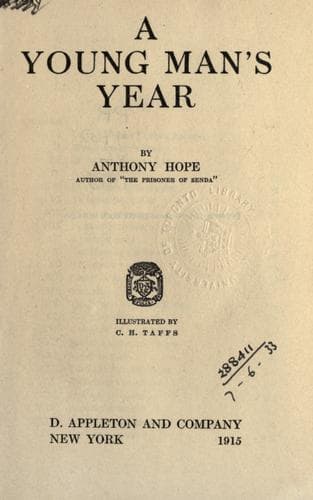
England -- Social life and customs -- Fiction; Lawyers -- Fiction; Man-woman relationships -- Fiction; Young men -- Fiction
"Her conscience can give the poor thing no peace, I should think." Again
Mrs. Lisle shook her head sadly.
"You mustn't think hardly of Bernadette, mother. It--it wasn't
altogether her fault that she and Godfrey didn't hit it off. He knows
that, I think, himself. I'm sure he'd say so. She had her difficulties
and--er--trials."
"Most married women have, my dear, but that's no reason for deserting
their husbands and children, and committing the sin that she has
committed--and is committing."
"If this unhappy person----" Ronald began.
Arthur might stand it from his mother; he could not from Ronald
Slingsby. "If you've nothing pleasant to call people, Slingsby, you
might just call them by their names. Bernadette has been a dear good
friend to me, and I don't like the phrase you choose to describe her.
And I must say, mother, that if you knew the circumstances as well as I
do, you'd be more charitable."
"I'm as sorry--as bitterly sorry--as I can be, dear, but----"
"It's more a question of justice than of sorrow."
"Well, how have we been unjust, Arthur?" This question of Anna's was
plainly hostile.
"You don't allow for circumstances and--and temptations, and----" He
broke off impatiently. "It's really not much good trying to explain."
"I'm inclined to be sorry I ever persuaded you to make their
acquaintance," sighed Mrs. Lisle.
Anna's hostility and Ronald Slingsby's prim commiseration annoyed Arthur
exceedingly. His mother's attitude towards him touched him more deeply,
and to a half-amused yet sincere remorse. It grew more marked with every
day of his visit. She showed an affectionate but rather reproachful
anxiety about him--about his life, his doings, and his ways of thought.
She seemed to fear--indeed she hinted--that his association with the
Lisles (which meant, of course, with Bernadette, and for which she
persisted in shouldering a responsibility not really belonging to her)
might have sapped his morals and induced a laxity in his principles and
perhaps--if only she knew all--in his conduct. She evinced a gentle yet
persistent curiosity about his work, about his companions and his
pursuits in London. She abounded in references to the hopes and
anxieties entertained about him by his father; she would add that she
knew, understood, and allowed for the temptations of young men; there
was the more need to seek strength where alone strength could be found.
Public-domain text, read in full here on John Shaqi.
Reviews
Reviews
No reviews yet
Be the first to share your thoughts on this work.
Elsewhere in the archive
Join the Discussion
Join the discussion
Sign in to leave a comment or review.
Sign InorCreate an account