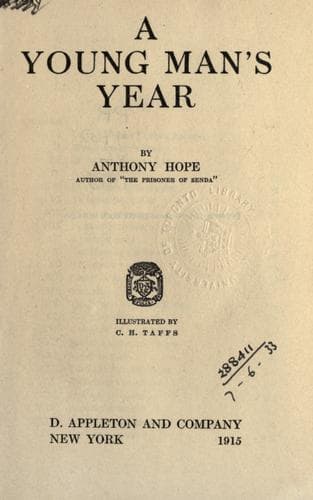
England -- Social life and customs -- Fiction; Lawyers -- Fiction; Man-woman relationships -- Fiction; Young men -- Fiction
In the morning they had tried a yokel for stealing a pig. The defence--a
guinea's worth--eloquently advanced and ardently pressed--was that the
prosecutor had presented the prisoner with the pig in a moment of
conviviality. The prosecutor met the suggestion with amazement, the jury
with smiles: one might get drunk, but no man was ever so drunk as to
give his pig away! Verdict--Guilty. His Lordship passed a light
sentence, faintly smiling over the ways of a world which, after nearly
fifty years in the law and eighteen on the Bench, still remained to him
rather remote and incomprehensible. This case of the pig was a merry
case. It lent itself to jokes, and young Bertie Rackstraw's caricature
(he solaced briefless days with art) of counsel for the defence
arm-in-arm with a gowned and bewigged pig was circulated and much
admired. _Pignus amoris_, another wag wrote under it.
Now, in the afternoon, a different atmosphere obtained in court. There
were no jokes and no caricatures. People were very quiet. Counsel for
the prosecution put his searching questions gravely and gently, almost
with pitifulness; counsel for the defence was careful, earnest, anxious.
Progress was slow, almost every word of the evidence had to go down in
the Judge's red book, to be written down in Sir Christopher's neat
precise handwriting. A man was on trial for his life and, as afternoon
darkened into evening, the battle drew near its fateful issue.
He was a big, burly, stolid, honest-looking fellow, inarticulate, not
able to help himself by his answers or to take proper advantage of the
dexterous leads given him by his counsel, who strained his right to lead
since life was at stake. In truth, though he was sorry that he had
killed her--since his old tenderness for her had revived, and moreover
he wished he had killed the other man instead--he could not see that he
had done wrong. He knew that the law said he had, and drew therefrom a
most formidable conclusion; but he did not feel convicted in his own
heart. She had deceived him and, when discovered, had derided him with
ugly words. Had he slain her then and there in his rage, the plea of
manslaughter might well have prevailed. But he said nothing to her; in
grim silence he had taken his way to the town and bought the knife, and
waited for two days his opportunity; then cunningly laid in wait where
she would come alone, and swiftly, in silence again, killed her. But may
not rage--ungovernable rage--last two days and be cunning? Round this
the battle raged. He had been cunning, calm, methodical.
Public-domain text, read in full here on John Shaqi.
Reviews
Reviews
No reviews yet
Be the first to share your thoughts on this work.
Elsewhere in the archive
Join the Discussion
Join the discussion
Sign in to leave a comment or review.
Sign InorCreate an account