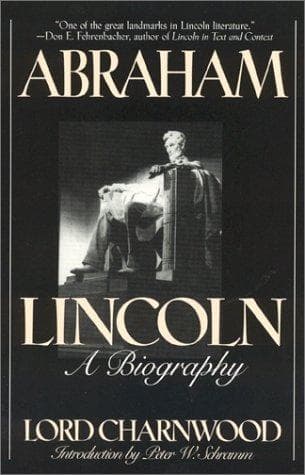
Abraham LincolnCharnwood, Godfrey Rathbone Benson, Baron
History
Abraham Lincoln
Charnwood, Godfrey Rathbone Benson, Baron
Lincoln, Abraham, 1809-1865; Presidents -- United States -- Biography
One famous incident of life in Congress must be told to explain the
temper of the times. In 1856, during one of the many debates that
arose out of Kansas, Sumner recited in the Senate a speech
conscientiously calculated to sting the slave-owning Senators to
madness. Sumner was a man with brains and with courage and rectitude
beyond praise, set off by a powerful and noble frame, but he lacked
every minor quality of greatness. He would not call his opponent in
debate a skunk, but he would expend great verbal ingenuity in coupling
his name with repeated references to that animal's attributes. On this
occasion he used to the full both the finer and the most exquisitely
tasteless qualities of his eloquence. This sort of thing passed the
censorship of many excellent Northern men who would lament Lincoln's
lack of refinement; and though from first to last the serious
provocation in their disputes lay in the set policy of the Southern
leaders, it ought to be realised that they, men who for the most part
were quite kind to their slaves and had long ago argued themselves out
of any compunction about slavery, were often exposed to intense verbal
provocation. Nevertheless, what followed on Sumner's speech is
terribly significant of the depravation of Southern honour.
Congressman Preston Brooks, of South Carolina, had an uncle in the
Senate; South Carolina, and this Senator in particular, had been
specially favoured with self-righteous insolence in Sumner's speech. A
day or so later the Senate had just risen and Sumner sat writing at his
desk in the Senate chamber in a position in which he could not quickly
rise. Brooks walked in, burning with piety towards his State and his
uncle, and in the presence, it seems, of Southern Senators who could
have stopped him, beat Sumner on the head with a stick with all his
might. Sumner was incapacitated by injuries to his spine for nearly
five years. Brooks, with a virtuous air, explained in Congress that he
had caught Sumner in a helpless attitude because if Sumner had been
free to use his superior strength he, Brooks, would have had to shoot
him with his revolver. It seems to be hardly an exaggeration to say
that the whole South applauded Brooks and exulted. Exuberant
Southerners took to challenging Northern men, knowing well that their
principles compelled them to refuse duels, but that the refusal would
still be humiliating to the North. Brooks himself challenged
Burlingame, a distinguished Congressman afterwards sent by Lincoln as
Minister to China, who had denounced him. Burlingame accepted, and his
second arranged for a rifle duel at a wild spot across the frontier at
Niagara. Brooks then drew back; he alleged, perhaps sincerely, that he
would have been murdered on his way through the Northern States, but
Northern people were a little solaced. The whole disgusting story
contains only one pleasant incident. Preston Brooks, who, after
Public-domain text, read in full here on John Shaqi.
Reviews
Reviews
No reviews yet
Be the first to share your thoughts on this work.
Elsewhere in the archive
Join the Discussion
Join the discussion
Sign in to leave a comment or review.
Sign InorCreate an account