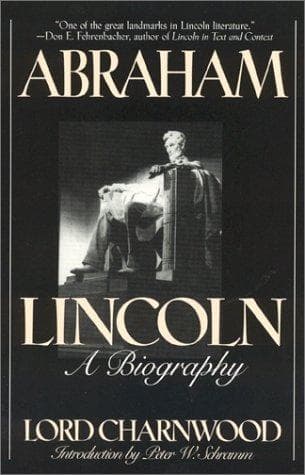
Abraham LincolnCharnwood, Godfrey Rathbone Benson, Baron
History
Abraham Lincoln
Charnwood, Godfrey Rathbone Benson, Baron
Lincoln, Abraham, 1809-1865; Presidents -- United States -- Biography
From an early date in November, 1860, every effort was made, by men too
numerous to mention, to devise if possible such a settlement of what were
now called the grievances of the South as would prevent any other State
from following the example of South Carolina. Apart from the intangible
difference presented by much disapprobation of slavery in the North and
growing resentment in the South as this disapprobation grew louder, the
solid ground of dispute concerned the position of slavery in the existing
Territories and future acquisitions of the United States Government; the
quarrel arose from the election of a President pledged to use whatever
power he had, though indeed that might prove little, to prevent the
further extension of slavery; and we may almost confine our attention to
this point. Other points came into discussion. Several of the Northern
States had "Personal Liberty Laws" expressly devised to impede the
execution of the Federal law of 1850 as to fugitive slaves. Some
attention was devoted to these, especially by Alexander Stephens, who, as
the Southern leader most opposed to immediate secession, wished to direct
men's minds to a grievance that could be remedied. Lincoln, who had
always said that, though the Fugitive Slave Law should be made just and
seemly, it ought in substance to be enforced, made clear again that he
thought such "Personal Liberty Laws" should be amended, though he
protested that it was not for him as President-elect to advise the State
Legislatures on their own business. The Republicans generally agreed.
Some of the States concerned actually began amending their laws. Thus,
if the disquiet of the South had depended on this grievance, the cause of
disquiet would no doubt have been removed. Again the Republican leaders,
including Lincoln in particular, let there be no ground for thinking that
an attack was intended upon slavery in the States where it was
established; they offered eventually to give the most solemn pledge
possible in this matter by passing an Amendment of the Constitution
declaring that it should never be altered so as to take away the
independence of the existing slave States as to this portion of their
democratic institutions. Lincoln indeed refused on several occasions to
make any fresh public disclaimer of an intention to attack existing
institutions. His views were "open to all who will read." "For the good
men in the South," he writes privately, "--I regard the majority of them
as such--I have no objection to repeat them seventy times seven. But I
have bad men to deal with both North and South; men who are eager for
something new upon which to base new misrepresentations; men who would
like to frighten me, or at least fix upon me the character of timidity
and cowardice." Nevertheless he endeavoured constantly in private
correspondence to narrow and define the issue, which, as he insisted,
concerned only the territorial extension of slavery.
Public-domain text, read in full here on John Shaqi.
Reviews
Reviews
No reviews yet
Be the first to share your thoughts on this work.
Elsewhere in the archive
Join the Discussion
Join the discussion
Sign in to leave a comment or review.
Sign InorCreate an account