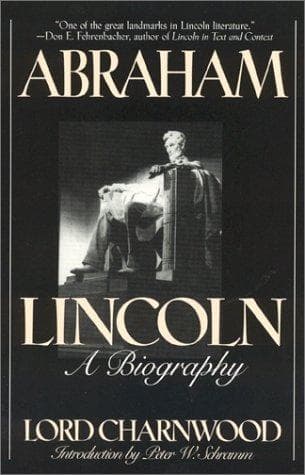
Abraham LincolnCharnwood, Godfrey Rathbone Benson, Baron
History
Abraham Lincoln
Charnwood, Godfrey Rathbone Benson, Baron
Lincoln, Abraham, 1809-1865; Presidents -- United States -- Biography
This story was entangled from the first with another difficult story.
Commissioners from the Southern Confederacy came to Washington and sought
interviews with Seward; they came to treat for the recognition of the
Confederacy and the peaceful surrender of forts and the like within its
borders. Meanwhile the action of Virginia was in the balance, and the
"Peace Convention," summoned by Virginia, still "threshing again," as
Lowell said, "the already twice-threshed straw of debate." The action of
Virginia and of other border States, about which Lincoln was intensely
solicitous, would certainly depend upon the action of the Government
towards the States that had already seceded. Might it not be well that
the Government should avoid immediate conflict with South Carolina about
Fort Sumter, though conflict with the Confederacy about Fort Pickens and
the rest would still impend? Was it not possible that conflict could be
staved off till an agreement could be reached with Virginia and the
border States, which would induce the seceded States to return? These
questions were clearly absurd, but they were as clearly natural, and they
greatly exercised Seward. Disappointed at not being President and
equally disturbed at the prospect of civil war, but still inclined to
large and sanguine hopes, he was rather anxious to take things out of
Lincoln's hands and very anxious to serve his country as the great
peacemaker. Indirect negotiations now took place between him and the
Southern Commissioners, who of course could not be officially recognised,
through the medium of two Supreme Court Judges, especially one Campbell,
who was then in Washington. Seward was quite loyal to Lincoln and told
him in a general way what he was doing; he was also candid with Campbell
and his friends, and explained to them his lack of authority, but he
talked freely and rashly of what he hoped to bring about. Lincoln gave
Seward some proper cautions and left him all proper freedom; but it is
possible that he once told Douglas that he intended, at that moment, to
evacuate Fort Sumter. The upshot of the matter is that the decision of
the Government was delayed by negotiations which, as it ought to have
known, could come to nothing, and that the Southern Government and the
Commissioners, after they had got home, thought they had been deceived in
these negotiations.
Public-domain text, read in full here on John Shaqi.
Reviews
Reviews
No reviews yet
Be the first to share your thoughts on this work.
Elsewhere in the archive
Join the Discussion
Join the discussion
Sign in to leave a comment or review.
Sign InorCreate an account