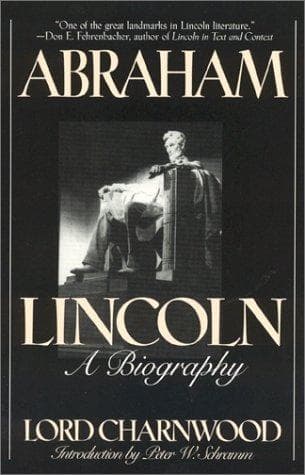
Abraham LincolnCharnwood, Godfrey Rathbone Benson, Baron
History
Abraham Lincoln
Charnwood, Godfrey Rathbone Benson, Baron
Lincoln, Abraham, 1809-1865; Presidents -- United States -- Biography
surprises of fresh naval invention by which the South, poor as were its
possibilities for ship-building, might have rendered impotent, as once
or twice it seemed likely to do, the Northern blockade. Gideon Welles,
the responsible Cabinet Minister, was constant and would appear to have
been capable at his task, but the inspiring mind of the Naval
Department was found in Gustavus V. Fox, a retired naval officer, who
at the beginning of Lincoln's administration was appointed Assistant
Secretary of the Navy. The policy of blockade was begun by Lincoln's
Proclamation on April 19, 1861. It was a hardy measure, certain to be
a cause of friction with foreign Powers. The United States Government
had contended in 1812 that a blockade which is to confer any rights
against neutral commerce must be an effective blockade, and has not
lately been inclined to take lax views upon such questions; but when it
declared its blockade of the South it possessed only three steamships
of war with which to make it effective. But the policy was stoutly
maintained. The Naval Department at the very first set about buying
merchant ships in Northern ports and adapting them to warlike use, and
building ships of its own, in the design of which it shortly obtained
the help of a Commission of Congress on the subject of ironclads. The
Naval Department had at least the fullest support and encouragement
from Lincoln in the whole of its policy. Everything goes to show that
he followed naval affairs carefully, but that, as he found them
conducted on sound lines by men that he trusted, his intervention in
them was of a modest kind. Welles continued throughout the member of
his Cabinet with whom he had the least friction, and was probably one
of those Ministers, common in England, who earn the confidence of their
own departments without in any way impressing the imagination of the
public; and a letter by Lincoln to Fox immediately after the affair of
Fort Sumter shows the hearty esteem and confidence with which from the
first he regarded Fox. Of the few slight records of his judgment in
these matters one is significant. The unfortunate expedition against
Charleston in the spring of 1863 was undertaken with high hopes by the
Naval Department; but Lincoln, we happen to know, never believed it
could succeed. He has, rightly or wrongly, been blamed for dealings
with his military officers in which he may be said to have spurred them
hard; he cannot reasonably be blamed for giving the rein to his expert
subordinates, because his own judgment, which differed from theirs,
turned out right. This is one of very many instances which suggest
that at the time when his confidence in himself was full grown his
disposition, if any, to interfere was well under control. It is also
one of the indications that his attention was alert in many matters in
which his hand was not seen.
Public-domain text, read in full here on John Shaqi.
Reviews
Reviews
No reviews yet
Be the first to share your thoughts on this work.
Elsewhere in the archive
Join the Discussion
Join the discussion
Sign in to leave a comment or review.
Sign InorCreate an account