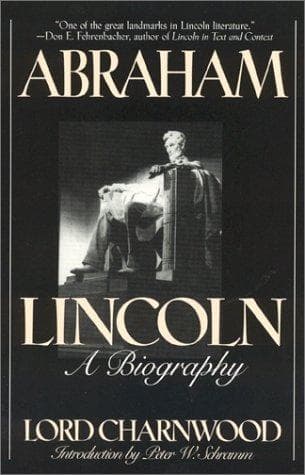
Abraham LincolnCharnwood, Godfrey Rathbone Benson, Baron
History
Abraham Lincoln
Charnwood, Godfrey Rathbone Benson, Baron
Lincoln, Abraham, 1809-1865; Presidents -- United States -- Biography
West were left intact, though with some severe losses, and would be
able before long to strike northward in a well-chosen direction; for
all that these were great and permanent gains. Yet the North was not
cheered. The great loss of life at Shiloh, the greatest battle in the
war so far, created a horrible impression. Halleck, under whom all
this progress had been made, properly enough received a credit, which
critics later have found to be excessive, though it is plain that he
had reorganised his army well; but Grant was felt to have been caught
napping at Shiloh; there were other rumours about him, too, and he fell
deep into general disfavour. The events of the Western war did not
pause for long, but, till the end of this year 1862, the North made no
further definite progress, and the South, though it was able to invade
the North, achieved no Important result. It will be well then here to
take up the story of events in the East and to follow them continuously
till May, 1863, when the dazzling fortune of the South in that theatre
if the war reached its highest point.
3. _The War in the East Up to May, 1863_.
The interest of this part of the Civil War lies chiefly in the
achievements of Lee and "Stonewall" Jackson. From the point of view of
the North, it was not only disastrous but forms a dreary and
controversial chapter. George McClellan came to Washington amid
overwhelming demonstrations of public confidence. His comparative
youth added to the interest taken in him; and he was spoken of as "the
young Napoleon." This ridiculous name for a man already thirty-four
was a sign that the people expected impossible things from him.
Letters to his wife, which have been injudiciously published, show him
to us delighting at first in the consideration paid to him by Lincoln
and Scott, proudly confident in his own powers, rather elated than
otherwise by a sense that the safety of the country rested on him
alone. "I shall carry the thing _en grande_, and crush the rebels in
one campaign." He soon had a magnificent army; he may be said to have
made it himself. Before, as he thought, the time had come to use it,
he had fallen from favour, and a dead set was being made against him in
Washington. A little later, at the crisis of his great venture, when,
as he claimed, the Confederate capital could have been taken, his
expedition was recalled. Then at a moment of deadly peril to the
country his services were again called in. He warded off the danger.
Yet a little while and his services were discarded for ever. This
summary, which is the truth, but not the whole truth, must enlist a
certain sympathy for him. The chief fact of his later life should at
once be added. In 1864, when a Presidential election was approaching
and despondency prevailed widely in the North, he was selected as the
champion of a great party. The Democrats adopted a "platform" which
expressed neither more nor less than a desire to end the war on any
terms.
Public-domain text, read in full here on John Shaqi.
Reviews
Reviews
No reviews yet
Be the first to share your thoughts on this work.
Elsewhere in the archive
Join the Discussion
Join the discussion
Sign in to leave a comment or review.
Sign InorCreate an account