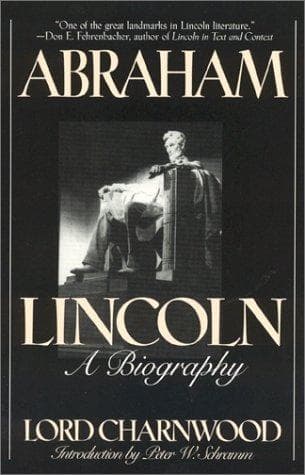
Abraham LincolnCharnwood, Godfrey Rathbone Benson, Baron
History
Abraham Lincoln
Charnwood, Godfrey Rathbone Benson, Baron
Lincoln, Abraham, 1809-1865; Presidents -- United States -- Biography
It is not known exactly what further evidence Lincoln then had for his
belief, but information which seems to have come later made him think
afterwards that he had been right. The following story was told him by
the Governor of Vermont, whose brother, a certain General Smith, served
under McClellan and was long his intimate friend. Lincoln believed the
story; so may we. The Mayor of New York, a shifty demagogue named
Fernando Wood, had visited McClellan in the Peninsula with a proposal
that he should become the Democratic candidate for the Presidency, and
with a view to this should pledge himself to certain Democratic
politicians to conduct the war in a way that should conciliate the
South, which to Lincoln's mind meant an "inefficient" way. McClellan,
after some days of unusual reserve, told Smith of this and showed him a
letter which he had drafted giving the desired pledge. On Smith's
earnest remonstrance that this "looked like treason," he did not send
the letter then. But Wood came again after the battle of Antietam, and
this time McClellan sent a letter in the same sense. This he
afterwards confessed to Smith, showing him a copy of the letter. Smith
and other generals asked, after this, to be relieved from service under
him. If, as can hardly be doubted, McClellan did this, there can be no
serious excuse for him, and no serious question that Lincoln was right
when he concluded it was unsafe to employ him. McClellan, according to
all evidence except his own letters, was a nice man, and was not likely
to harbour a thought of what to him seemed treason; it is honourable to
him that he wished later to serve under Grant but was refused by him.
But, to one of his views, the political situation before and after
Antietam was alarming, and it is certain that to his inconclusive mind
and character an attitude of half loyalty would be easy. He may not
have wished that Lee should escape, but he had no ardent desire that he
should not. Right or wrong, such was the ground of Lincoln's
independent and conscientiously deliberate decision.
Public-domain text, read in full here on John Shaqi.
Reviews
Reviews
No reviews yet
Be the first to share your thoughts on this work.
Elsewhere in the archive
Join the Discussion
Join the discussion
Sign in to leave a comment or review.
Sign InorCreate an account