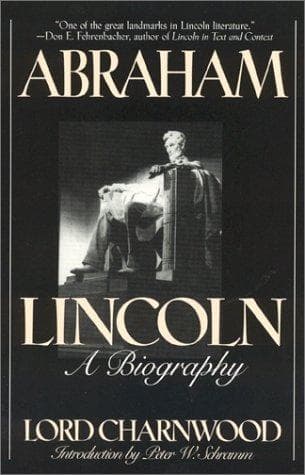
Abraham LincolnCharnwood, Godfrey Rathbone Benson, Baron
History
Abraham Lincoln
Charnwood, Godfrey Rathbone Benson, Baron
Lincoln, Abraham, 1809-1865; Presidents -- United States -- Biography
opposition, not actually to the prosecution of the war, but to any and
every measure essential for it, was now developing, and a serious
division, such as at this stage any important resignation would have
produced in the ranks of the Republicans, or, as they now called
themselves, the "Union men," would have been perilous.
On the first day of January, 1863, the President signed the further
Proclamation needed to give effect to emancipation. The small portions
of the South which were not in rebellion were duly excepted; the naval
and military authorities were ordered to maintain the freedom of the
slaves seeking their protection; the slaves were enjoined to abstain
from violence and to "labour faithfully for reasonable wages" if
opportunity were given them; all suitable slaves were to be taken into
armed service, especially for garrison duties. Before the end of 1863,
a hundred thousand coloured men were already serving, as combatants or
as labourers, on military work in about equal number. They were
needed, for volunteering was getting slack, and the work of guarding
and repairing railway lines was specially repellent to Northern
volunteers. The coloured regiments fought well; they behaved well in
every way. Atrocious threats of vengeance on them and their white
officers were officially uttered by Jefferson Davis, but, except for
one hideous massacre wrought in the hottest of hot blood, only a few
crimes by individuals were committed in execution of these threats. To
Lincoln himself it was a stirring thought that when democratic
government was finally vindicated and restored by the victory of the
Union, "then there will be some black men who can remember that with
silent tongue and clenched teeth and steady eye and well-poised bayonet
they have helped mankind on to this great consummation." There was,
however, prejudice at first among many Northern officers against negro
enlistment. The greatest of the few great American artists, St.
Gaudens, commemorated in sculpture (as the donor of the new playing
fields at Harvard commemorated by his gift) the action of a brilliant
and popular Massachusetts officer, Robert Gould Shaw, who set the
example of leaving his own beloved regiment to take command of a
coloured regiment, at the head of which he died, gallantly leading them
and gallantly followed by them in a desperate fight.
Public-domain text, read in full here on John Shaqi.
Reviews
Reviews
No reviews yet
Be the first to share your thoughts on this work.
Elsewhere in the archive
Join the Discussion
Join the discussion
Sign in to leave a comment or review.
Sign InorCreate an account