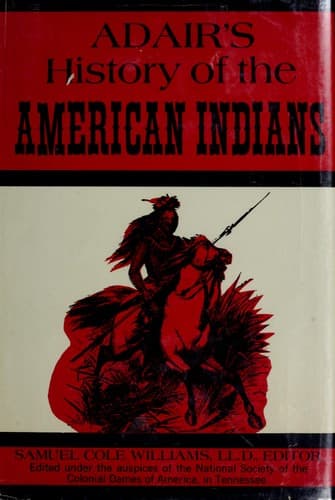
Adair's History of the American IndiansAdair, James
History
Adair's History of the American Indians
Adair, James
Indians -- Origin; Indians of North America -- Southern States
Under this argument, I will also mention another striking resemblance to
the Jews, as to their TITHES—As the sacerdotal office was fixed in the
tribe {89} of Levi, they had forty-eight cities allotted them from the
other tribes. And Moses assures us, in _Deut._ xiv. 28, 29, that those
tribes paid them also once in three years, the tithe, or tenth of all
they possessed, which is supposed to be about the thirtieth part of
their annual possessions; by which means they were reasonably
maintained, as spiritual pastors, and enabled to fulfil the extensive
and charitable application of their dues, as enjoined.
It hath been already hinted, that the Indian prophets undertake by the
emanation of the divine spirit of fire, co-operating with them, to bring
down proper rains for crops, on the penalty of loosing their own lives;
as the Indians reckon that a regular virtuous life will sufficiently
enable their great beloved men to bring blessings of plenty to the
beloved people; and if they neglect it, they are dangerous enemies, and
a great curse to the community. They imagine his prophetic power is also
restrictive as to winter-rains, they doing more hurt than good; for they
justly observe, that their ground seldom suffers by the want of
winter-rains. Their sentiments on this head, are very strong; they say,
_Ishtohoollo Aba_ allows the winter-rain to fall unsought, but that he
commanded their forefathers to seek for the summer-rain, according to
the old law, otherwise he would not give it to them. If the seasons have
been answerable, when the ripened harvest is gathered in, the old women
pay their reputed prophet with religious good-will, a certain
proportional quantity of each kind of the new fruits, measured in the
same large portable back-baskets, wherein they carried home the ripened
fruits. This stated method they yearly observe; which is as consonant to
the Levitical institution, as can be reasonably expected, especially, as
their traditions have been time out of mind preserved only by oral echo.
Public-domain text, read in full here on John Shaqi.
Reviews
Reviews
No reviews yet
Be the first to share your thoughts on this work.
Elsewhere in the archive
Join the Discussion
Join the discussion
Sign in to leave a comment or review.
Sign InorCreate an account