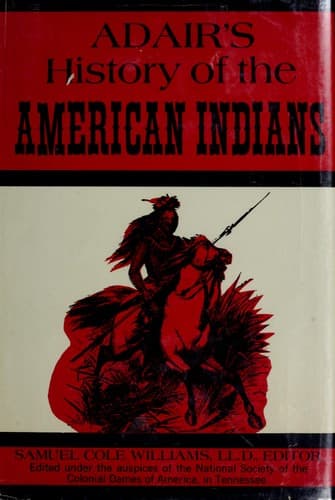
Adair's History of the American IndiansAdair, James
History
Adair's History of the American Indians
Adair, James
Indians -- Origin; Indians of North America -- Southern States
The Indian priests and prophets are initiated by unction. The Chikkasah
some time ago set apart some of their old men of the religious order.
They first obliged them to sweat themselves for the space of three days
and nights, in a small green hut, made on purpose, at a considerable
distance from any dwelling; through a scrupulous fear of contracting
pollution by contact, or from the effluvia of polluted people—and a
strong desire of secreting their religious mysteries. During that
interval, they were allowed to eat nothing but green tobacco, nor to
drink any thing except warm water, highly imbittered with the
button-snake-root, to cleanse their bodies, and prepare them to serve in
their holy, or beloved office, before the divine essence, whom during
this preparation they constantly invoke by his essential name, as before
described. After which, their priestly garments and ornaments, mentioned
under a former argument, page 84, are put on, and, then bear’s oil is
poured upon their head.—If they could procure olive, or palm oil,
instead of bear’s oil, doubtless they would prefer and use it in their
sacred ceremonies; especially, as they are often destitute of their
favourite bear’s oil for domestic uses.
The Jewish women were so exceedingly addicted to anoint their faces and
bodies, that they often preferred oil to the necessaries of life; the
widow who addressed herself to Elisha, though she was in the most
pinching straits, and wanted every thing else, yet had a pot of oil to
anoint herself. This custom of anointing became universal, among the
eastern nations. They were not satisfied with perfuming themselves with
sweet oils and fine essences; but anointed birds—as in the ninth ode of
Anacreon;
Tot unde nunc odores?
Huc advolans per auras,
Spirasque, depulisque; {122}
The poet introduces two doves conversing together; one of which carried
a letter to Bathyllus, the anointed beau; and the other wishes her much
joy, for her perfumed wings that diffused such an agreeable smell
around. And the same poet orders the painter to draw this Samian beau,
with his hair wet with essence, to give him a fine appearance. Nitidas
comas ejus facilto. Ode 29. Virgil describes Turnus, just after the same
manner,
Vibratos calido ferro, myrrhaque madentes.
ÆNEID, 1. 12.
Homer tells us, that Telemachus and Philistratus anointed their whole
bodies with essences, after they had visited the palace of Menelaus, and
before they sat down at table. Odyss. 1. 4.
The Jews reckoned it a singular piece of disrespect to their guest, if
they offered him no oil. When any of them paid a friendly visit, they
had essences presented to anoint their heads; to which custom of
civility the Saviour alludes in his reproof of the parsimonious
Pharisee, at whose house he dined. Luke vii. 46.
Public-domain text, read in full here on John Shaqi.
Reviews
Reviews
No reviews yet
Be the first to share your thoughts on this work.
Elsewhere in the archive
Join the Discussion
Join the discussion
Sign in to leave a comment or review.
Sign InorCreate an account