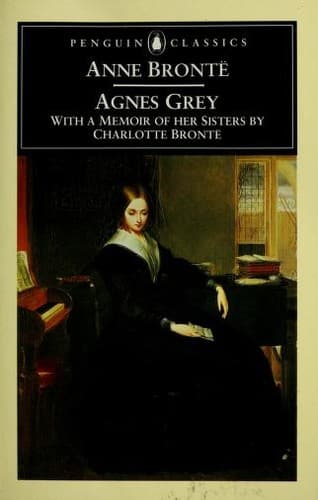
Autobiographical fiction; England -- Fiction; Feminist fiction; Governesses -- Fiction; Single women -- Fiction
Was it then come to this—that I should be _disappointed_ to receive a
letter from my only sister: and because it was not written by a
comparative stranger? Dear Mary! and she had written it so kindly—and
thinking I should be so pleased to have it!—I was not worthy to read
it! And I believe, in my indignation against myself, I should have put
it aside till I had schooled myself into a better frame of mind, and
was become more deserving of the honour and privilege of its perusal:
but there was my mother looking on, and wishful to know what news it
contained; so I read it and delivered it to her, and then went into the
schoolroom to attend to the pupils: but amidst the cares of copies and
sums—in the intervals of correcting errors here, and reproving
derelictions of duty there, I was inwardly taking myself to task with
far sterner severity. “What a fool you must be,” said my head to my
heart, or my sterner to my softer self;—“how could you ever dream that
he would write to you? What grounds have you for such a hope—or that he
will see you, or give himself any trouble about you—or even think of
you again?” “What grounds?”—and then Hope set before me that last,
short interview, and repeated the words I had so faithfully treasured
in my memory. “Well, and what was there in that?—Who ever hung his
hopes upon so frail a twig? What was there in those words that any
common acquaintance might not say to another? Of course, it was
possible you might meet again: he might have said so if you had been
going to New Zealand; but that did not imply any _intention_ of seeing
you—and then, as to the question that followed, anyone might ask that:
and how did you answer?—Merely with a stupid, commonplace reply, such
as you would have given to Master Murray, or anyone else you had been
on tolerably civil terms with.” “But, then,” persisted Hope, “the tone
and manner in which he spoke.” “Oh, that is nonsense! he always speaks
impressively; and at that moment there were the Greens and Miss Matilda
Murray just before, and other people passing by, and he was obliged to
stand close beside you, and to speak very low, unless he wished
everybody to hear what he said, which—though it was nothing at all
particular—of course, he would rather not.” But then, above all, that
emphatic, yet gentle pressure of the hand, which seemed to say,
“_Trust_ me;” and many other things besides—too delightful, almost too
flattering, to be repeated even to one’s self. “Egregious folly—too
absurd to require contradiction—mere inventions of the imagination,
which you ought to be ashamed of. If you would but consider your own
unattractive exterior, your unamiable reserve, your foolish
diffidence—which must make you appear cold, dull, awkward, and perhaps
ill-tempered too;—if you had but rightly considered these from the
beginning, you would never have harboured such presumptuous thoughts:
and now that you have been so foolish, pray repent and amend, and let
us have no more of it!”
Public-domain text, read in full here on John Shaqi.
Reviews
Reviews
No reviews yet
Be the first to share your thoughts on this work.
Elsewhere in the archive
Join the Discussion
Join the discussion
Sign in to leave a comment or review.
Sign InorCreate an account