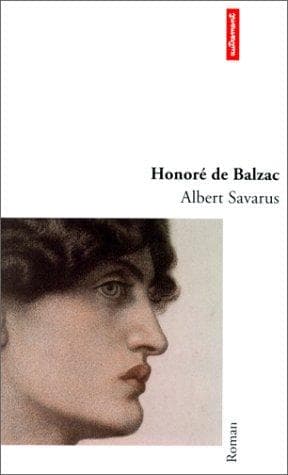
France -- Social life and customs -- 19th century -- Fiction; French fiction -- Translations into English
“If you insist on the plain truth, I will never marry Monsieur de
Soulas--”
“Oh! the _never_ of a girl of nineteen!” retorted her mother, with a
bitter smile.
“The _never_ of Mademoiselle de Watteville,” said Rosalie with firm
decision. “My father, I imagine, has no intention of making me marry
against my wishes?”
“No, indeed no!” said the poor Baron, looking affectionately at his
daughter.
“Very well!” said the Baroness, sternly controlling the rage of a bigot
startled at finding herself unexpectedly defied, “you yourself, Monsieur
de Watteville, may take the responsibility of settling your daughter.
Consider well, mademoiselle, for if you do not marry to my mind you will
get nothing out of me!”
The quarrel thus begun between Madame de Watteville and her husband, who
took his daughter’s part, went so far that Rosalie and her father were
obliged to spend the summer at les Rouxey; life at the Hotel de Rupt
was unendurable. It thus became known in Besancon that Mademoiselle de
Watteville had positively refused the Comte de Soulas.
After their marriage Mariette and Jerome came to les Rouxey to succeed
to Modinier in due time. The Baron restored and repaired the house to
suit his daughter’s taste. When she heard that these improvements had
cost about sixty thousand francs, and that Rosalie and her father were
building a conservatory, the Baroness understood that there was a leaven
of spite in her daughter. The Baron purchased various outlying plots,
and a little estate worth thirty thousand francs. Madame de Watteville
was told that, away from her, Rosalie showed masterly qualities, that
she was taking steps to improve the value of les Rouxey, that she had
treated herself to a riding habit and rode about; her father, whom she
made very happy, who no longer complained of his health, and who was
growing fat, accompanied her in her expeditions. As the Baroness’
name-day grew near--her name was Louise--the Vicar-General came one day
to les Rouxey, deputed, no doubt, by Madame de Watteville and Monsieur
de Soulas, to negotiate a peace between mother and daughter.
“That little Rosalie has a head on her shoulders,” said the folk of
Besancon.
After handsomely paying up the ninety thousand francs spent on les
Rouxey, the Baroness allowed her husband a thousand francs a month to
live on; she would not put herself in the wrong. The father and daughter
were perfectly willing to return to Besancon for the 15th of August, and
to remain there till the end of the month.
When, after dinner, the Vicar-General took Mademoiselle de Watteville
apart, to open the question of the marriage, by explaining to her that
it was vain to think any more of Albert, of whom they had had no news
for a year past, he was stopped at once by a sign from Rosalie. The
strange girl took Monsieur de Grancey by the arm, and led him to a seat
under a clump of rhododendrons, whence there was a view of the lake.
Public-domain text, read in full here on John Shaqi.
Reviews
Reviews
No reviews yet
Be the first to share your thoughts on this work.
Elsewhere in the archive
Join the Discussion
Join the discussion
Sign in to leave a comment or review.
Sign InorCreate an account