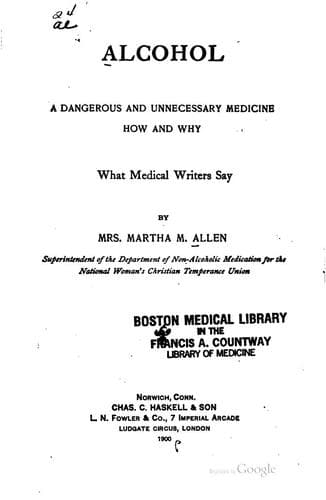
Alcohol: A Dangerous and Unnecessary Medicine, How and Why: What Medical Writers SayAllen, Martha Meir
Science
Alcohol: A Dangerous and Unnecessary Medicine, How and Why: What Medical Writers Say
Allen, Martha Meir
Alcohol -- Physiological effect; Temperance
DIARRHOEA:--"This is a symptom of the presence of an irritant
of which the stomach is trying to be rid. Do not arrest it
prematurely, but assist it. If it persists, arrowroot, or corn
starch, or flour, mixed with cold water to the consistency of
cream may be taken, a tablespoonful at a time. 2. Bread charcoal
with cold milk. 3. A tablespoonful of cinnamon water with a
teaspoonful of lime water, mixed, every one, two or three hours.
Smaller dose for a child. Diet should be confined to toast, milk
toast, milk, cold or boiled. Tea, broth, meat, etc., are sure to
renew the trouble. Diarrhoea in infants is generally due to
errors in feeding, either over-feeding or the use of improper
kinds of food. Boiled milk thickened with flour is a simple
remedy in light cases. Alcoholics are utterly unnecessary in
diarrhoea, and to order them for young children is quite
wrong. A full enema of water, as hot as can be borne, will
remove offending substances from the bowels.
"Beware of diarrhoea medicines containing opium in any form.
They are unnecessary and dangerous, particularly for young
children."
DYSENTERY:--"At the beginning of the disease the stomach should
be relieved by the use of a large warm-water emetic. The
quantity of food should be restricted to the smallest amount
compatible with comfort. Ripe fruits, especially grapes, and
most stewed fruits, may be used in abundance to keep the bowels
regular. Salads, spices and other condiments, fats and fried
foods should be strictly avoided, together with tea, coffee,
alcoholics and all other narcotics.
"The diet should consist chiefly of simple soups, well boiled
oatmeal gruel, egg beaten with water or milk, and similar foods.
In many cases regulation of the diet is sufficient. Either the
hot or the cold enema may be employed.
"The use of opium, which is exceedingly common in this disease,
is not advisable, as it produces a feverish condition of the
system, decidedly prejudicial to recovery. Herroner, an eminent
German physician, very strongly discourages the use of opium in
this disease."--DR. J. H. KELLOGG.
Public-domain text, read in full here on John Shaqi.
Reviews
Reviews
No reviews yet
Be the first to share your thoughts on this work.
Elsewhere in the archive
Join the Discussion
Join the discussion
Sign in to leave a comment or review.
Sign InorCreate an account