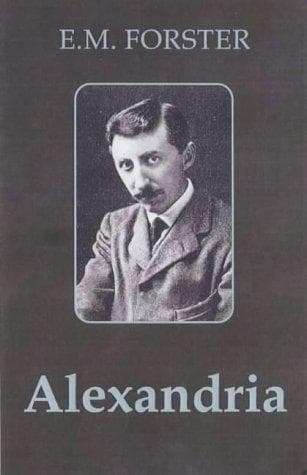
Alexandria: A History and a GuideForster, E. M. (Edward Morgan)
History
Alexandria: A History and a Guide
Forster, E. M. (Edward Morgan)
Alexandria (Egypt) -- Guidebooks; Alexandria (Egypt) -- History
The ecclesiastical life of Alexandria is not as intense to-day as in the
days of St. Athanasius, but it is even more complicated. The city is the
seat of four patriarchates, and many other religious bodies are
represented in her. The complications are partly due to the activity of
Roman Catholicism, which, in order to win oriental schismatics back to
the fold, has in each case created a counter church that shall
approximate as nearly as possible to the conditions and ritual that are
familiar—_e.g._ an Armenian Catholic Church for the Armenians, a Coptic
Catholic for the Copts. And further complications proceed from the
modern, commercial communities who tend to regard religion as an
expression of nationality rather than of dogma.
The following list of the Churches may indicate the unsuspected vastness
of the subject:—
GREEK PATRIARCHATE: “Orthodox Greek,” or “Melchite” church (from Melek,
Arabic for King). Present Patriarch, Photius I. His position is curious.
He is a subject neither to the Kingdom of Greece, nor to the Patriarch
of Constantinople, but holds, or rather held, his position from the
Sultan of Turkey direct. Thus ecclesiastically he is independent. His
title is “Patriarch of Alexandria, Lybia, Pentapolis, Ethiopia, and all
Egypt,” but his patriarchate does not extend beyond Egypt, which he
administers through four bishops. Historically he represents the church
that kept loyal to Byzantium and to the Emperor at the Council of
Chalcedon (A.D. 451) when the rest of Egypt began to drift away over the
Monophysite question. After the Arab Conquest the Greek Patriarch
resided in Cairo, but came back to Alexandria about sixty years ago to
the Convent and Church of St. Saba. (p. 106). As for dogma, the Greek
Orthodox chiefly differs from the Roman Catholic and the Protestants
over the “Filioque” clause in the Nicene creed. It holds that the Holy
Ghost proceeded not from the Father and the Son, but through the Son.
This is the point over which the East and West split, and failed to
reunite in 1459.
* * * * *
CHURCHES OF THE GREEK COMMUNITY: These too are Greek Orthodox in faith.
But they do not recognise the Patriarch. Indeed their relations with him
during the late war were of the liveliest. They are the churches of a
body of business men who only owe allegiance to the Kingdom of Greece.
They are self-administering, and choose their own priests. The Patriarch
however, has the right of examining those priests’ credential, and of
giving them permission to officiate. The Community has a Cathedral (The
Annunciation) near the Place St. Catherine (p. 142); also three churches
in Ramleh,—St. Stefano, St. Nicolas, and the Prophet Elias.
* * * * *
Public-domain text, read in full here on John Shaqi.
Reviews
Reviews
No reviews yet
Be the first to share your thoughts on this work.
Elsewhere in the archive
Join the Discussion
Join the discussion
Sign in to leave a comment or review.
Sign InorCreate an account