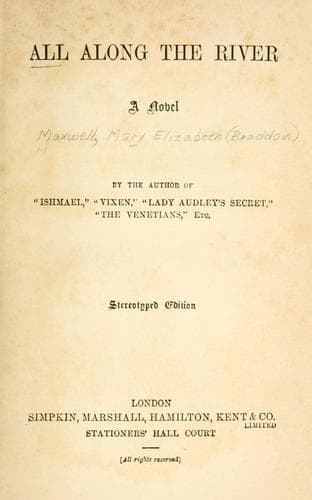
All along the River: A NovelBraddon, M. E. (Mary Elizabeth)
General
All along the River: A Novel
Braddon, M. E. (Mary Elizabeth)
English fiction -- 19th century
Isola stood listening to their footsteps, as they passed the little
painted shrine on the hill path. She heard them give the time of day
to a party of peasant women, with empty baskets on their heads, going
up to gather the last of the olives. Then she roamed about the wooded
valley and the slope of the hill towards Colla for an hour or two, and
then, growing suddenly tired, she crept home, in time to sit beside her
baby while he slept his placid noontide sleep. She bent over the little
rosebud mouth and kissed it, in a rapture of maternal love.
“So young to see Rome,” she murmured. “And to think that those
star-like eyes will see and take no heed; to think that such a glorious
vision will pass before him, and he will remember nothing.”
The day was very long, something like one of those endless days at
Trelasco, when her husband was in Burmah and she had only the dog and
the cat for her companions. She thought of those fond friends to-day
with a regretful sigh--the sleepy Shah, so calm and undemonstrative in
his attachment, but with a placid, purring delight in her society which
seemed to mean a great deal; the fox-terrier, so active and intense in
his affection, demanding so much attention, intruding himself upon her
walks and reveries with such eager, not-to-be-denied devotion. She had
no four-footed friends here; and the want of them made an empty space
in her life.
In the afternoon the weather changed suddenly. The sky became overcast,
the sea a leaden colour; and the mistral came whistling up the valley
with a great rustling and shivering of the silver-green foliage and
creaking of the old bent branches, like the withered arms of witch or
sorceress. All the glory of the day was gone, and the white villas on
the crest of the eastward hill stood out in livid distinctness against
the blackened sky.
Isola wandered up the hill-path, past the little shrine where the way
divided, the point at which she had seen her husband and his party
vanish in the sunny morning. She felt a sudden sense of loneliness now
the sun was gone; a childish longing for the return of her friends,
for evening and lamplight, and the things that make for cheerfulness.
She was cold and dull, and out of spirits. She had left the house
while the sun was shining, and she had come without shawl or wrap
of any kind, and the mistral made her shiver. Yet she had no idea
of hurrying home. The loneliness of the house had become oppressive
before she left it; and she knew there would be some hours to wait for
the return of the excursionists. So she mounted the steep mule-path,
slowly and painfully, till she had gone two-thirds of the way to Colla;
and then she sat down to rest on the low stone wall which enclosed a
little garden in a break of the wood, from which point there was a
far-stretching view seaward.
Public-domain text, read in full here on John Shaqi.
Reviews
Reviews
No reviews yet
Be the first to share your thoughts on this work.
Elsewhere in the archive
Join the Discussion
Join the discussion
Sign in to leave a comment or review.
Sign InorCreate an account