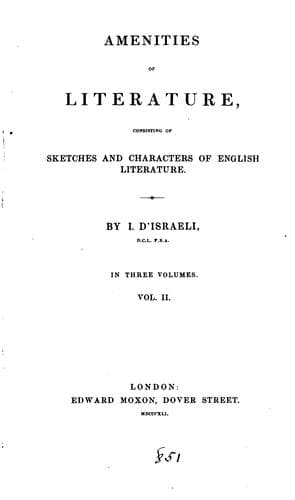
Amenities of Literature: Consisting of Sketches and Characters of English LiteratureDisraeli, Isaac
History
Amenities of Literature: Consisting of Sketches and Characters of English Literature
Disraeli, Isaac
Authors, English -- Biography; English literature -- History and criticism; Great Britain -- Intellectual life
There was a disorderly grandeur about the castellated mansion which
should have required the ukase of this Sovereign of many leagues,
surrounded by many hundreds of his retainers; but rarely the cry of the
oppressed was allowed to disturb the Lord, while all within were exact
in their appointments, as clock-work movements which were wound up in
the government of these immense domestic establishments. Great families
had their "household books," and in some the illegible hand of the
lordly master himself, when the day arrived that even barons were
incited to scriptural attempts, may yet be seen.[4] These nobles, it
appears, were more select in their falconer and their _chef de cuisine_
than in their domestic tutor, for such there was among the retainers of
the household. This humiliated sage, indeed, in his own person was a
model for the young varlets, on whom it was his office to inculcate that
patient suppleness and profound reverence for their Lord and their
superiors, which seemed to form the single principle of their education.
At this period we find a domestic proverb which evidently came from the
buttery. As then eight or ten tables were to be daily covered, it is
probable the chivalric epicures sometimes found their tastes
disappointed by the culinary artists; it would seem that this put them
into sudden outbreakings of ill-humour, for the proverb records that
"the minstrels are often beaten for the faults of the cooks."
Too much leisure, too many loungers, and the tedium of prolonged
banquets, a want of the pleasures of the luxurious sedentary would be as
urgent as in ages more intellectual and refined; those pleasures in
which we participate though we are passive, receiving the impressions
without any exertion of our own--pleasures which make us delighted
auditors or spectators. The theatre was not yet raised, but the
listlessness of vacuity gave birth to all the variegated artists of
revelry. If they had not comedy itself, they abounded with the comic,
and without tragedy the tragic often moved their emotions. Nor were they
even then without their scenical illusions, marvels which came and
vanished, as the Tregetour clapped his hands--enchantments! which though
Chaucer opined to be only "natural magic," all the world tremblingly
enjoyed as the work of devils; a sensation which we have totally lost in
the necromancy of our pantomimes. And thus it was that in the illumed
hall of the feudal Lord we discover a whole dramatic company; which,
however dissimilar in their professional arts, were all enlisted under
the indefinite class of MINSTRELS; for in the domestic state of society
we are now recalling, the poetic minstrel must be separated from those
other minstrels of very different acquirements, with whom, however, he
was associated.
Public-domain text, read in full here on John Shaqi.
Reviews
Reviews
No reviews yet
Be the first to share your thoughts on this work.
Elsewhere in the archive
Join the Discussion
Join the discussion
Sign in to leave a comment or review.
Sign InorCreate an account