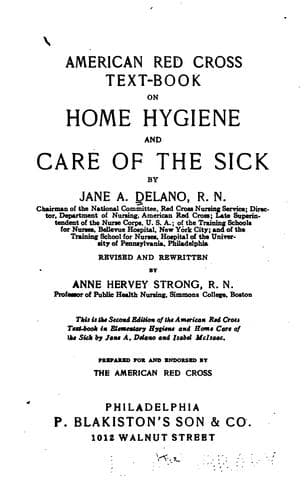
American Red Cross Text-Book on Home Hygiene and Care of the SickAmerican National Red Cross
Science
American Red Cross Text-Book on Home Hygiene and Care of the Sick
American National Red Cross
Home nursing; Hygiene; Nurses; Nursing
7. Explain methods of concurrent disinfection.
8. Explain methods of terminal disinfection.
9. Tell how the following should be disinfected: discharges from the
nose, throat, eyes, ears, bowels, bladder, wounds, and sores; bed
and personal linen; blankets; mattresses; dishes; utensils,
especially bedpans and urinals; clothing and person of the
attendant, especially the hands; furniture, rugs, and woodwork.
VIII.
1. Name some of the most obvious symptoms of sickness.
2. Name some symptoms that would lead you to take a patient to a
doctor; to send for a doctor; to send for a doctor in haste.
3. Name some symptoms that are dangerous to neglect even though the
patient feels fairly well.
4. What are some of the symptoms of physical defects in children?
Name some conditions that are frequently caused by unremedied
defects.
5. Name some diseases commonly ushered in by symptoms resembling
those of a cold in the head.
6. What symptoms would lead you to isolate a patient?
7. Give as many illustrations as you can of the part played by good
and bad habits in determining health and sickness.
IX.
1. How would you dress a cut? a burn? a sprain?
2. What would you do for a person suffering from colic? nausea?
diarrhœa? chill?
3. What are the symptoms of shock? heat stroke? heat prostration?
What treatment would you give in each case?
4. What would you do for a fainting person? for a person suffering
from nose bleed? from earache? from a cinder in the eye?
5. What course of action would you advise for a person troubled with
sleeplessness? frequent headaches? excessive irritability?
unusual depression of spirits? unfounded suspicions of other
persons' motives? a tendency to have the feelings hurt easily?
inability to control the emotions?
X.
1. Why is it better to prevent sickness than to cure it?
2. Name the essentials of good hygienic conditions for babies, for
children, for grown people, for the aged.
3. How much of the sickness in the United States is preventable?
4. If part of the sickness is preventable, why is it not prevented?
5. What constitutes adequate care of the sick?
6. What proportion of the young men in your community who were
drafted have been rejected for physical disability? How many were
rejected for disabilities that might have been prevented?
XI. (Answers to the following questions can generally be obtained from
local health officers.)
1. What are the duties and powers of your local board of health?
2. How much did your city or town spend per person last year on
health protection? How does this amount compare with the amount
spent per person for police protection? for fire protection?
Public-domain text, read in full here on John Shaqi.
Reviews
Reviews
No reviews yet
Be the first to share your thoughts on this work.
Elsewhere in the archive
Join the Discussion
Join the discussion
Sign in to leave a comment or review.
Sign InorCreate an account