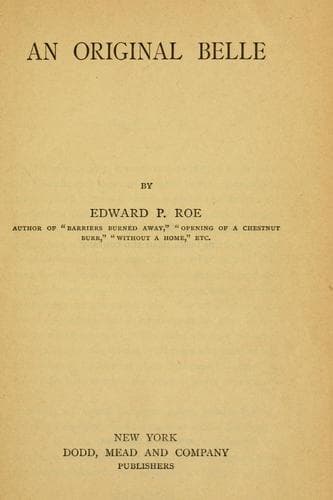
Love stories; United States -- History -- Civil War, 1861-1865 -- Fiction
On the morning of the 16th, however, the head-lines of the leading
journals startled the people through the North. The rebel advance
had occupied Chambersburg, Pa. The invasion was an accomplished
fact. The same journals contained a call from the President for
100,000 militia, of which the State of New York was to furnish
20,000. The excitement in Pennsylvania was intense, for not only
her capital, but her principal towns and cities were endangered.
The thick-flying rumors of the past few days received terrible
confirmation, and, while Lee's plans were still shrouded in mystery,
enough was known to awaken apprehension, while the very uncertainty
proved the prolific source of the most exaggerated and direful
stories. There was immense activity at the various armories, and
many regiments of the city militia expected orders to depart at
any hour. The metropolis was rocking with excitement, and wherever
men congregated there were eager faces and excited tones.
Behind his impassive manner, when he appeared in the street, no
one disguised deeper feeling, more eager hope, more sickening fear,
than Willard Merwyn. When would his mother's letter come? If this
crisis should pass and he take no part in it he feared that he
himself would be lost.
Since his last call upon Marian he felt that he could not see her
again until he could take some decided course; but if there were
blows to be struck by citizens at the North, or if his mother's
letter acceded to his wish, however grudgingly, he could act at
once, and on each new day he awoke with the hope that he might be
unchained before its close.
The 17th of June was a memorable day. The morning press brought
confirmation of Lee's northward advance. The men of the Quaker
City were turning out en masse, either to carry the musket or for
labor on fortifications, and it was announced that twelve regiments
of the New-York militia were under marching orders. The invasion
was the one topic of conversation. There was an immense revival
of patriotism, and recruiting at the armories went on rapidly. At
this outburst of popular feeling disloyalty shrunk out of sight for
a time, and apparently the invaders who had come north as allies
of the peace party created an uprising, as they had expected, but
it was hostile to them.
The people were reminded of the threats of the Southern leaders.
The speech of Jeff Davis in the winter of 1860-61 was quoted: "If
war should result from secession, it will not be our fields that
will witness its ravages, but those of the North."
The fact that this prediction was already fulfilled stung even the
half-hearted into action, and nerved the loyalty of others, and
when it became known that the gallant Seventh Regiment would march
down Broadway en route for Pennsylvania at noon, multitudes lined
the thoroughfare and greeted their defenders with acclamations.
Public-domain text, read in full here on John Shaqi.
Reviews
Reviews
No reviews yet
Be the first to share your thoughts on this work.
Elsewhere in the archive
Join the Discussion
Join the discussion
Sign in to leave a comment or review.
Sign InorCreate an account