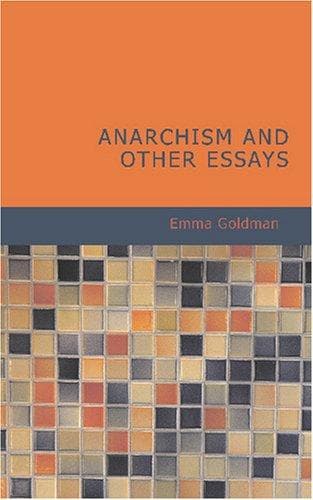
Anarchism; Feminism; Women -- Social and moral questions
Emancipation has brought woman economic equality with man; that is,
she can choose her own profession and trade; but as her past and
present physical training has not equipped her with the necessary
strength to compete with man, she is often compelled to exhaust all
her energy, use up her vitality, and strain every nerve in order to
reach the market value. Very few ever succeed, for it is a fact that
women teachers, doctors, lawyers, architects, and engineers are
neither met with the same confidence as their male colleagues, nor
receive equal remuneration. And those that do reach that enticing
equality, generally do so at the expense of their physical and
psychical well-being. As to the great mass of working girls and
women, how much independence is gained if the narrowness and lack of
freedom of the home is exchanged for the narrowness and lack of
freedom of the factory, sweat-shop, department store, or office? In
addition is the burden which is laid on many women of looking after a
"home, sweet home"--cold, dreary, disorderly, uninviting--after a
day's hard work. Glorious independence! No wonder that hundreds of
girls are willing to accept the first offer of marriage, sick and
tired of their "independence" behind the counter, at the sewing or
typewriting machine. They are just as ready to marry as girls of the
middle class, who long to throw off the yoke of parental supremacy.
A so-called independence which leads only to earning the merest
subsistence is not so enticing, not so ideal, that one could expect
woman to sacrifice everything for it. Our highly praised
independence is, after all, but a slow process of dulling and
stifling woman's nature, her love instinct, and her mother instinct.
Nevertheless, the position of the working girl is far more natural
and human than that of her seemingly more fortunate sister in the
more cultured professional walks of life--teachers, physicians,
lawyers, engineers, etc., who have to make a dignified, proper
appearance, while the inner life is growing empty and dead.
The narrowness of the existing conception of woman's independence and
emancipation; the dread of love for a man who is not her social
equal; the fear that love will rob her of her freedom and
independence; the horror that love or the joy of motherhood will only
hinder her in the full exercise of her profession--all these together
make of the emancipated modern woman a compulsory vestal, before whom
life, with its great clarifying sorrows and its deep, entrancing
joys, rolls on without touching or gripping her soul.
Emancipation, as understood by the majority of its adherents and
exponents, is of too narrow a scope to permit the boundless love and
ecstasy contained in the deep emotion of the true woman, sweetheart,
mother, in freedom.
Public-domain text, read in full here on John Shaqi.
Reviews
Reviews
No reviews yet
Be the first to share your thoughts on this work.
Elsewhere in the archive
Join the Discussion
Join the discussion
Sign in to leave a comment or review.
Sign InorCreate an account