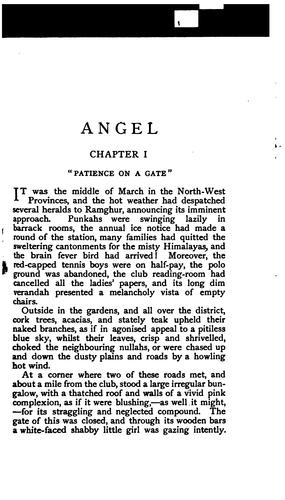
Angel: A sketch in Indian inkCroker, B. M. (Bithia Mary)
History
Angel: A sketch in Indian ink
Croker, B. M. (Bithia Mary)
British -- India -- Fiction; India -- History -- British occupation, 1765-1947 -- Fiction
THE CHITACHAR CLUB
THIS long, leisurely tour through the crops, the villages, the jungles,
brought Angel into more intimate touch with India than in all the
previous years she had been in the country. Her knowledge of the
language was an immense assistance to her; she had a keen enjoyment
of the picturesque, a quick eye for character, and the rural life and
scenery offered her a profoundly interesting study. Many an afternoon,
accompanied by an escort of the camp dogs, including her own fox
terriers, Sam and John, she took long walks or rides in its vicinity.
These excursions afforded her far more pleasure than sitting under the
tent flies, watching, with irrepressible yawns the interminable chess
tournament between Mrs. Gordon and the collector—chess being a form of
amusement which was beyond her intellectual grasp—or listening to Mr.
Lindsay as he read aloud,—and he read extremely well,—choice bits of
Ruskin, Walter Pater, and Rossetti.
But Angel required more variety—more actual life. She made her way
into the huts of the peasant women, and talked to them eagerly, as they
spun, or ground millet, or she joined the children among the crops, as
they scared the flocks of monkeys and parrots, and cut grass for the
buffaloes. Some were old friends she had made two years previously, and
one and all welcomed the fair lady, and confided to her their joys,
their sorrows, and their schemes. How well she appeared to understand;
she gave them small presents, of amazing magnificence in their eyes,
and a sympathy that was still more surprising.
How hard their lives were, she said to herself continually—lives of
unceasing, monotonous toil, though they had not to bear the winter cold
and privations of the English poor, but too often famine and pestilence
stalked hand-in-hand through their land. And yet how cheerful they
appeared, how they loved their plot of land, trusted their affairs
to their family priest, their future to the village god, found their
amusements in the veriest trifles, and were content with their fate.
But the beautiful, fair English lady was not content with her fate—oh,
no; much less with that which her clear eyes discerned, the fate which
was rapidly overtaking her best friend.
* * * * *
Public-domain text, read in full here on John Shaqi.
Reviews
Reviews
No reviews yet
Be the first to share your thoughts on this work.
Elsewhere in the archive
Join the Discussion
Join the discussion
Sign in to leave a comment or review.
Sign InorCreate an account