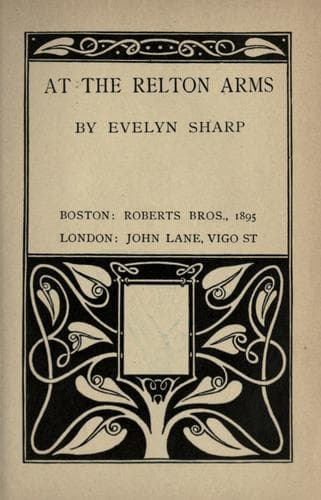
England -- Social life and customs -- 19th century -- Fiction
"I could hardly expect you to," she said dryly; "there is somebody for
you. But for me there is nobody, and I am getting old, and I feel
frightened sometimes. Remember, that is an admission. I don't know why I
am telling you all this, because I want to get to the end. At all
events, I had a sort of sensation that I had tried more than most women
to gain something, and I had hopelessly missed it; so it was time to
turn round and do something, as I should have to go on living all the
same. Now, there were two courses open to me: one was to turn the
literary cynic and write a novel in which I could vent my spite against
my own particular Fate by personifying myself in an ill-used heroine,
who talks epigrams from the moment she gets out of bed in the morning,
and who loves to assure her men acquaintances that they may mention
questionable topics before her if they like. And the other was to repent
and do good works, and become the fashionable philanthropist, and tell
the poor and fatherless that they have got to be improved in their
condition whether they think they want improving or not. Guess which I
chose! Oh, I do wonder if you will guess right;" and she dropped on her
knees beside him and looked into his face.
"If you were any ordinary clever woman, I should guess the first; but--"
he paused and looked at the eager, scornful face, and smiled to himself,
"no, that wouldn't do for you, Joan. And yet, neither would the other. I
can't imagine you walking through the village in awful, hideous
garments, carrying a rice pudding and a Bible. Oh, Joan, surely _you_
are not going in for that self-indulgent bosh known as charity?"
"That is where you are so like a man!" She flung herself away from him,
and began walking about the room and talking quickly. "You are right
about the novel, yes. You see, if I were to write a book it would be so
frightfully personal that I should have to take a pseudonym to begin
with. And where is the satisfaction of jeering at your friends when they
don't know you are doing it? But I don't know why you should take up
the old, played-out notion of charity as the only alternative. Who wants
to go about with Bibles and rice puddings? Nous avons changé tout cela,
mon ami! Why, there is no such thing as charity left now; haven't you
learnt that from Sir Marcus? It is philanthropy nowadays, my good sir,
equally self-indulgent, of course, but more modern and ten times more
entertaining. The Bible never need come in at all, and no one sees the
rice puddings, _they're_ all managed by committees; all you have to do
is to lend your name for the circulars of the league, and hold meetings
over afternoon tea in your drawing-room, and _talk_. That is all. _Now_
do you see what I mean?"
"I gather that you mean to take up philanthropy as a new form of
diversion; but I am afraid I do not quite recognize the full advantages
of the scheme. I don't see--"
Public-domain text, read in full here on John Shaqi.
Reviews
Reviews
No reviews yet
Be the first to share your thoughts on this work.
Join the Discussion
Join the discussion
Sign in to leave a comment or review.
Sign InorCreate an account