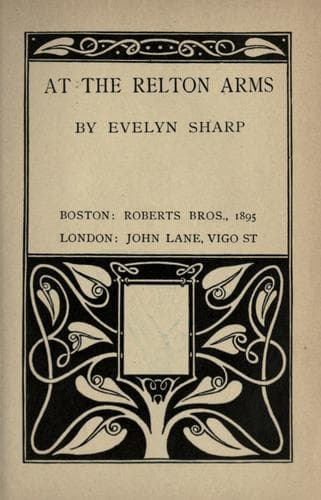
England -- Social life and customs -- 19th century -- Fiction
Something surged up to his lips in the silence of the next few minutes,
and he held his breath and tightened his grasp on the cold fingers
before he said it. Then she pulled away her hand almost roughly, and
spoke quickly.
"Do you know it is nearly eleven? Norah had a bad night with the baby
last night, and you look awfully tired too. Hadn't you better be
moving?"
So he did not say it after all.
"You have not told me what you think yet. I suppose you are only
laughing at me," she said, when he bade her good-bye.
He found himself smiling in a conventional manner; he could not have
said why.
"Oh, no, why should I? I think it is very wise of you," he said, opening
the door to go out; "and when I tell Norah she will say 'Just like
Joan!' Good-night."
And she answered down the stairs after him, "Good-night, and mind you
tell Norah all about it!"
"I'll be hanged if I do," thought the musician, as he walked down the
drive; and he congratulated himself all the way back on not having made
a fool of himself.
"I'm sure I hope he won't," added Lady Joan to herself out loud, as the
front-door banged. Then she walked unsteadily into her boudoir, and made
up the fire, and sat down on the sofa, and looked dully into the flames.
And presently she turned and hid her face in the cushions, and burst
into tears.
CHAPTER IX.
Lady Joan went up to her town house at the end of the summer, but her
philanthropic campaign was not a success. The field of philanthropy was
overcrowded just then with people like herself, who had too little
wealth and too much energy to be of any practical use to the great
organizers of charity, who never wanted anything from their devotees but
subscriptions and obedience; a reformer does not want to be interfered
with by a penniless nobody who has independent views concerning his
method of reform. And Lady Joan soon found that she was not in a set
that troubled itself much about the suffering poor. The people she met
in Digby's studio were mostly theoretical Socialists, who complained
that the cause of Socialism was being ruined by the enthusiasts who
tried to make it work before its principles had been properly
disseminated among the people; and amongst her other friends were some
who had a small and private charity of their own, but were so jealous of
it when they had that she found it impossible to work with them; or else
they were quite willing to use her house and her carriage and her time,
if she would meekly give them all these without being allowed a voice in
the arrangements or a particle of credit for what she did. And she found
that as much sweating went on in the administration of charity as its
administrators were in the habit of exposing in the slums; she met jaded
gentlewomen in the employ of philanthropists, who spent their lives in
addressing envelopes at something less than the market price, and
footsore secretaries who walked the slums to verify the abuses which
Public-domain text, read in full here on John Shaqi.
Reviews
Reviews
No reviews yet
Be the first to share your thoughts on this work.
Join the Discussion
Join the discussion
Sign in to leave a comment or review.
Sign InorCreate an account