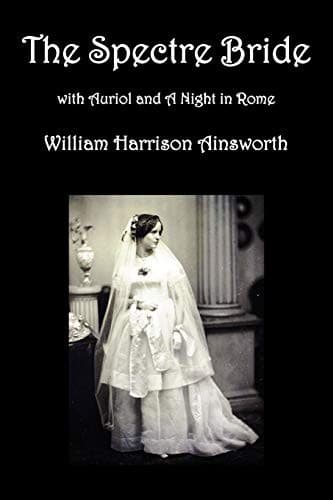
Auriol; or, The Elixir of LifeAinsworth, William Harrison
Science
Auriol; or, The Elixir of Life
Ainsworth, William Harrison
Detective and mystery stories; Gothic fiction; Horror tales; Paranormal fiction
Over the mantelpiece was stretched Vertue's copy of Ralph Aggas's famous
survey of our "great metropolis," made about the beginning of
Elizabeth's reign, or perhaps a little earlier, when it was scarcely so
great a metropolis as at the present time, and when novelists, gentlemen
of the press, cabmen, omnibus cads, and other illustrious personages
were unborn and undreamed of; when St. Giles's, in lieu of its
mysterious and Dædalian Seven Dials (which should have for their motto
Wordsworth's title, "We are Seven"), consisted of a little cluster of
country houses, surrounded by a grove of elms; when a turreted wall
girded in the City, from Aldgate to Grey Friars; when a pack of
staghounds was kept in Finsbury Fields, and archers and cross-bowmen
haunted the purlieus of the Spital; when he who strolled westward from
Charing Cross (then no misnomer) beheld neither Opera House nor
club-house, but a rustic lane, with a barn at one end, and a goodly
assortment of hay-carts and hay-stacks at the other; when the Thames was
crossed by a single bridge, and that bridge looked like a street, and
the street itself like a row of palaces. On the right of this plan hung
a sketch of Will Somers, jester to Henry VIII., after the picture by
Holbein; on the left an engraving of Geoffrey Hudson, the diminutive
attendant of Henrietta Maria. This niche was devoted to portraits of the
bluff king before mentioned, and his six spouses; that to the melancholy
Charles and his family. Here, the Great Fire of 1666, with its black
profiles of houses, relieved by a sheet of "bloody and malicious" flame,
formed a pleasant contrast to the icy wonders of the Frost Fair, held on
the Thames in 1684, when carriages were driven through the lines of
tents, and an ox was roasted on the water, to the infinite delectation
of the citizens. There Old Saint Paul's (in the words of Victor Hugo,
"one of those Gothic monuments so admirable and so irreparable"), and
which is but ill replaced by the modern "bastard counterpart" of the
glorious fane of St. Peter at Rome, reared its venerable tower (not
dome) and lofty spire to the sky. Next to St. Paul's came the reverend
Abbey of Westminster, taken before it had been disfigured by the towers
added by Wren; and next to the abbey opened the long and raftered vista
of its magnificent neighbouring hall. Several plans and prospects of the
Tower of London, as it appeared at different epochs, occupied a corner
to themselves: then came a long array of taverns, from the Tabard in
Southwark, the Boar's Head in Eastcheap, and the Devil near Temple Bar,
embalmed in the odour of poesy, to the Nag's Head in Cheapside,
notorious for its legend of the consecration of the Protestant bishops
in 1559; there also might you see--
Public-domain text, read in full here on John Shaqi.
Reviews
Reviews
No reviews yet
Be the first to share your thoughts on this work.
Elsewhere in the archive
Join the Discussion
Join the discussion
Sign in to leave a comment or review.
Sign InorCreate an account