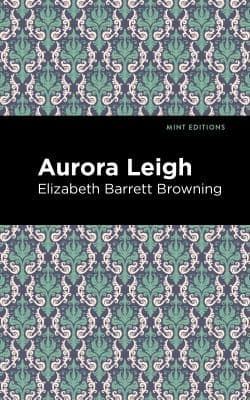
English poetry -- 19th century; Epic poetry, English; Novels in verse
And what he ‘thought,’ poor Vincent! what he ‘thought,’
May never mean enough to ruffle me.
—Why, this room stifles. Better burn than choke;
Best have air, air, although it comes with fire,
Throw open blinds and windows to the noon
And take a blister on my brow instead
Of this dead weight! best, perfectly be stunned
By those insufferable cicale, sick
And hoarse with rapture of the summer-heat,
That sing like poets, till their hearts break, ... sing
Till men say, ‘It’s too tedious.’
Books succeed,
And lives fail. Do I feel it so, at last?
Kate loves a worn-out cloak for being like mine,
While I live self-despised for being myself,
And yearn toward some one else, who yearns away
From what he is, in his turn. Strain a step
For ever, yet gain no step? Are we such,
We cannot, with our admirations even,
Our tip-toe aspirations, touch a thing
That’s higher than we? is all a dismal flat,
And God alone above each,—as the sun
O’er level lagunes, to make them shine and stink,—
Laying stress upon us with immediate flame,
While we respond with our miasmal fog,
And call it mounting higher, because we grow
More highly fatal?
Tush, Aurora Leigh!
You wear your sackcloth looped in Cæsar’s way,
And brag your failings as mankind’s. Be still.
There _is_ what’s higher, in this very world,
Than you can live, or catch at. Stand aside,
And look at others—instance little Kate!
She’ll make a perfect wife for Carrington.
She always has been looking round the earth
For something good and green to alight upon
And nestle into, with those soft-winged eyes
Subsiding now beneath his manly hand
’Twixt trembling lids of inexpressive joy:
I will not scorn her, after all, too much,
That so much she should love me. A wise man
Can pluck a leaf, and find a lecture in ’t;
And I, too, ... God has made me,—I’ve a heart
That’s capable of worship, love, and loss;
We say the same of Shakspeare’s. I’ll be meek,
And learn to reverence, even this poor myself.
The book, too—pass it. ‘A good book,’ says he,
‘And you a woman.’ I had laughed at that,
But long since. I’m a woman,—it is true;
Alas, and woe to us, when we feel it most!
Then, least care have we for the crowns and goals,
And compliments on writing our good books.
Public-domain text, read in full here on John Shaqi.
Reviews
Reviews
No reviews yet
Be the first to share your thoughts on this work.
Elsewhere in the archive
Join the Discussion
Join the discussion
Sign in to leave a comment or review.
Sign InorCreate an account