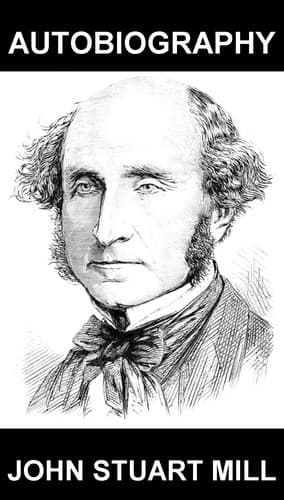
Mill, John Stuart, 1806-1873; Philosophers -- England -- Biography
of great use; but whatever may be the practical value of a true
philosophy of these matters, it is hardly possible to exaggerate the
mischiefs of a false one. The notion that truths external to the mind
may be known by intuition or consciousness, independently of observation
and experience, is, I am persuaded, in these times, the great
intellectual support of false doctrines and bad institutions. By the aid
of this theory, every inveterate belief and every intense feeling, of
which the origin is not remembered, is enabled to dispense with the
obligation of justifying itself by reason, and is erected into its own
all-sufficient voucher and justification. There never was such an
instrument devised for consecrating all deep-seated prejudices. And the
chief strength of this false philosophy in morals, politics, and
religion, lies in the appeal which it is accustomed to make to the
evidence of mathematics and of the cognate branches of physical science.
To expel it from these, is to drive it from its stronghold: and because
this had never been effectually done, the intuitive school, even after
what my father had written in his _Analysis of the Mind_, had in
appearance, and as far as published writings were concerned, on the
whole the best of the argument. In attempting to clear up the real
nature of the evidence of mathematical and physical truths, the _System
of Logic_ met the intuitive philosophers on ground on which they had
previously been deemed unassailable; and gave its own explanation, from
experience and association, of that peculiar character of what are
called necessary truths, which is adduced as proof that their evidence
must come from a deeper source than experience. Whether this has been
done effectually, is still _sub judice_; and even then, to deprive a
mode of thought so strongly rooted in human prejudices and partialities,
of its mere speculative support, goes but a very little way towards
overcoming it; but though only a step, it is a quite indispensable one;
for since, after all, prejudice can only be successfully combated by
philosophy, no way can really be made against it permanently until it
has been shown not to have philosophy on its side.
Public-domain text, read in full here on John Shaqi.
Reviews
Reviews
No reviews yet
Be the first to share your thoughts on this work.
Elsewhere in the archive
Join the Discussion
Join the discussion
Sign in to leave a comment or review.
Sign InorCreate an account