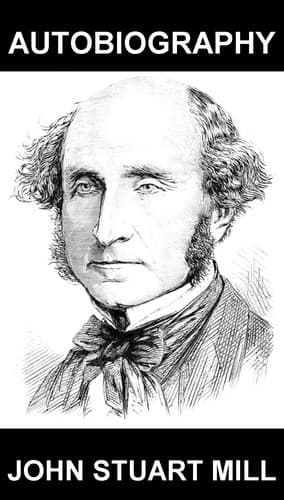
Mill, John Stuart, 1806-1873; Philosophers -- England -- Biography
But the conditions of the question were considerably altered when a body
of electors sought me out, and spontaneously offered to bring me forward
as their candidate. If it should appear, on explanation, that they
persisted in this wish, knowing my opinions, and accepting the only
conditions on which I could conscientiously serve, it was questionable
whether this was not one of those calls upon a member of the community
by his fellow-citizens, which he was scarcely justified in rejecting. I
therefore put their disposition to the proof by one of the frankest
explanations ever tendered, I should think, to an electoral body by a
candidate. I wrote, in reply to the offer, a letter for publication,
saying that I had no personal wish to be a member of Parliament, that I
thought a candidate ought neither to canvass nor to incur any expense,
and that I could not consent to do either. I said further, that if
elected, I could not undertake to give any of my time and labour to
their local interests. With respect to general politics, I told them
without reserve, what I thought on a number of important subjects on
which they had asked my opinion: and one of these being the suffrage, I
made known to them, among other things, my conviction (as I was bound to
do, since I intended, if elected, to act on it), that women were
entitled to representation in Parliament on the same terms with men. It
was the first time, doubtless, that such a doctrine had ever been
mentioned to English electors; and the fact that I was elected after
proposing it, gave the start to the movement which has since become so
vigorous, in favour of women's suffrage. Nothing, at the time, appeared
more unlikely than that a candidate (if candidate I could be called)
whose professions and conduct set so completely at defiance all ordinary
notions of electioneering, should nevertheless be elected. A well-known
literary man[, who was also a man of society,] was heard to say that the
Almighty himself would have no chance of being elected on such a
programme. I strictly adhered to it, neither spending money nor
canvassing, nor did I take any personal part in the election, until
about a week preceding the day of nomination, when I attended a few
public meetings to state my principles and give to any questions which
the electors might exercise their just right of putting to me for their
own guidance; answers as plain and unreserved as my address. On one
subject only, my religious opinions, I announced from the beginning that
I would answer no questions; a determination which appeared to be
completely approved by those who attended the meetings. My frankness on
all other subjects on which I was interrogated, evidently did me far
more good than my answers, whatever they might be, did harm. Among the
proofs I received of this, one is too remarkable not to be recorded. In
the pamphlet, _Thoughts on Parliamentary Reform_, I had said, rather
Public-domain text, read in full here on John Shaqi.
Reviews
Reviews
No reviews yet
Be the first to share your thoughts on this work.
Elsewhere in the archive
Join the Discussion
Join the discussion
Sign in to leave a comment or review.
Sign InorCreate an account