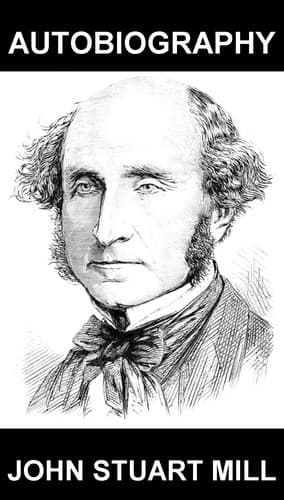
Mill, John Stuart, 1806-1873; Philosophers -- England -- Biography
Another public duty, of a most serious kind, it was my lot to have to
perform, both in and out of Parliament, during these years. A
disturbance in Jamaica, provoked in the first instance by injustice, and
exaggerated by rage and panic into a premeditated rebellion, had been
the motive or excuse for taking hundreds of innocent lives by military
violence, or by sentence of what were called courts-martial, continuing
for weeks after the brief disturbance had been put down; with many added
atrocities of destruction of property logging women as well as men, and
a general display of the brutal recklessness which usually prevails when
fire and sword are let loose. The perpetrators of those deeds were
defended and applauded in England by the same kind of people who had so
long upheld negro slavery: and it seemed at first as if the British
nation was about to incur the disgrace of letting pass without even a
protest, excesses of authority as revolting as any of those for which,
when perpetrated by the instruments of other governments, Englishmen can
hardly find terms sufficient to express their abhorrence. After a short
time, however, an indignant feeling was roused: a voluntary Association
formed itself under the name of the Jamaica Committee, to take such
deliberation and action as the case might admit of, and adhesions poured
in from all parts of the country. I was abroad at the time, but I sent
in my name to the Committee as soon as I heard of it, and took an active
part in the proceedings from the time of my return. There was much more
at stake than only justice to the negroes, imperative as was that
consideration. The question was, whether the British dependencies, and
eventually, perhaps, Great Britain itself, were to be under the
government of law, or of military licence; whether the lives and persons
of British subjects are at the mercy of any two or three officers
however raw and inexperienced or reckless and brutal, whom a
panic-stricken Governor, or other functionary, may assume the right to
constitute into a so-called court-martial. This question could only be
decided by an appeal to the tribunals; and such an appeal the Committee
determined to make. Their determination led to a change in the
chairmanship of the Committee, as the chairman, Mr. Charles Buxton,
thought it not unjust indeed, but inexpedient, to prosecute Governor
Eyre and his principal subordinates in a criminal court: but a
numerously attended general meeting of the Association having decided
this point against him, Mr. Buxton withdrew from the Committee, though
continuing to work in the cause, and I was, quite unexpectedly on my own
part, proposed and elected chairman. It became, in consequence, my duty
to represent the Committee in the House of Commons, sometimes by putting
questions to the Government, sometimes as the recipient of questions,
more or less provocative, addressed by individual members to myself; but
Public-domain text, read in full here on John Shaqi.
Reviews
Reviews
No reviews yet
Be the first to share your thoughts on this work.
Elsewhere in the archive
Join the Discussion
Join the discussion
Sign in to leave a comment or review.
Sign InorCreate an account