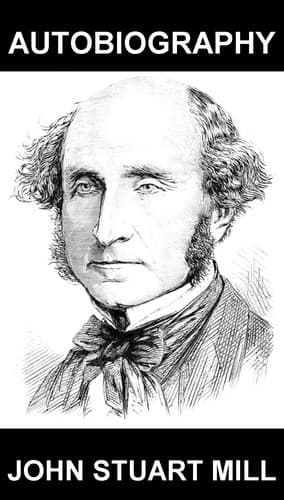
Mill, John Stuart, 1806-1873; Philosophers -- England -- Biography
It was the period of my mental progress which I have now reached that I
formed the friendship which has been the honour and chief blessing of my
existence, as well as the source of a great part of all that I have
attempted to do, or hope to effect hereafter, for human improvement. My
first introduction to the lady who, after a friendship of twenty years,
consented to become my wife, was in 1830, when I was in my twenty-fifth
and she in her twenty-third year. With her husband's family it was the
renewal of an old acquaintanceship. His grandfather lived in the next
house to my father's in Newington Green, and I had sometimes when a boy
been invited to play in the old gentleman's garden. He was a fine
specimen of the old Scotch puritan; stern, severe, and powerful, but
very kind to children, on whom such men make a lasting impression.
Although it was years after my introduction to Mrs. Taylor before my
acquaintance with her became at all intimate or confidential, I very
soon felt her to be the most admirable person I had ever known. It is
not to be supposed that she was, or that any one, at the age at which I
first saw her, could be, all that she afterwards became. Least of all
could this be true of her, with whom self-improvement, progress in the
highest and in all senses, was a law of her nature; a necessity equally
from the ardour with which she sought it, and from the spontaneous
tendency of faculties which could not receive an impression or an
experience without making it the source or the occasion of an accession
of wisdom. Up to the time when I first saw her, her rich and powerful
nature had chiefly unfolded itself according to the received type of
feminine genius. To her outer circle she was a beauty and a wit, with an
air of natural distinction, felt by all who approached her: to the
inner, a woman of deep and strong feeling, of penetrating and intuitive
intelligence, and of an eminently meditative and poetic nature. Married
at an early age to a most upright, brave, and honourable man, of liberal
opinions and good education, but without the intellectual or artistic
tastes which would have made him a companion for her, though a steady
and affectionate friend, for whom she had true esteem and the strongest
affection through life, and whom she most deeply lamented when dead;
shut out by the social disabilities of women from any adequate exercise
of her highest faculties in action on the world without; her life was
one of inward meditation, varied by familiar intercourse with a small
circle of friends, of whom one only (long since deceased) was a person
of genius, or of capacities of feeling or intellect kindred with her
own, but all had more or less of alliance with her in sentiments and
opinions. Into this circle I had the good fortune to be admitted, and I
soon perceived that she possessed in combination, the qualities which in
all other persons whom I had known I had been only too happy to find
singly.
Public-domain text, read in full here on John Shaqi.
Reviews
Reviews
No reviews yet
Be the first to share your thoughts on this work.
Elsewhere in the archive
Join the Discussion
Join the discussion
Sign in to leave a comment or review.
Sign InorCreate an account