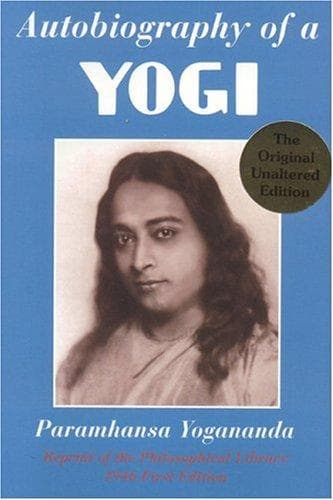
Yogananda, Paramahansa, 1893-1952; Yogis -- India -- Biography
The deeper aim of the early rishi-musicians was to blend the singer
with the Cosmic Song which can be heard through awakening of man’s
occult spinal centers. Indian music is a subjective, spiritual,
and individualistic art, aiming not at symphonic brilliance but at
personal harmony with the Oversoul. The Sanskrit word for musician
is BHAGAVATHAR, “he who sings the praises of God.” The SANKIRTANS
or musical gatherings are an effective form of yoga or spiritual
discipline, necessitating deep concentration, intense absorption
in the seed thought and sound. Because man himself is an expression
of the Creative Word, sound has the most potent and immediate effect
on him, offering a way to remembrance of his divine origin.
The SANKIRTAN issuing from Sri Yukteswar’s second-story sitting
room on the day of the festival was inspiring to the cooks amidst
the steaming pots. My brother disciples and I joyously sang the
refrains, beating time with our hands.
By sunset we had served our hundreds of visitors with KHICHURI (rice
and lentils), vegetable curry, and rice pudding. We laid cotton
blankets over the courtyard; soon the assemblage was squatting
under the starry vault, quietly attentive to the wisdom pouring from
Sri Yukteswar’s lips. His public speeches emphasized the value of
KRIYA YOGA, and a life of self-respect, calmness, determination,
simple diet, and regular exercise.
A group of very young disciples then chanted a few sacred hymns; the
meeting concluded with SANKIRTAN. From ten o’clock until midnight,
the ashram residents washed pots and pans, and cleared the courtyard.
My guru called me to his side.
“I am pleased over your cheerful labors today and during the past
week of preparations. I want you with me; you may sleep in my bed
tonight.”
This was a privilege I had never thought would fall to my lot. We
sat awhile in a state of intense divine tranquillity. Hardly ten
minutes after we had gotten into bed, Master rose and began to
dress.
“What is the matter, sir?” I felt a tinge of unreality in the
unexpected joy of sleeping beside my guru.
“I think that a few students who missed their proper train connections
will be here soon. Let us have some food ready.”
“Guruji, no one would come at one o’clock in the morning!”
“Stay in bed; you have been working very hard. But I am going to
cook.”
At Sri Yukteswar’s resolute tone, I jumped up and followed him to
the small daily-used kitchen adjacent to the second-floor inner
balcony. Rice and DHAL were soon boiling.
My guru smiled affectionately. “Tonight you have conquered fatigue
and fear of hard work; you shall never be bothered by them in the
future.”
As he uttered these words of lifelong blessing, footsteps sounded
in the courtyard. I ran downstairs and admitted a group of students.
Public-domain text, read in full here on John Shaqi.
Reviews
Reviews
No reviews yet
Be the first to share your thoughts on this work.
Elsewhere in the archive
Join the Discussion
Join the discussion
Sign in to leave a comment or review.
Sign InorCreate an account