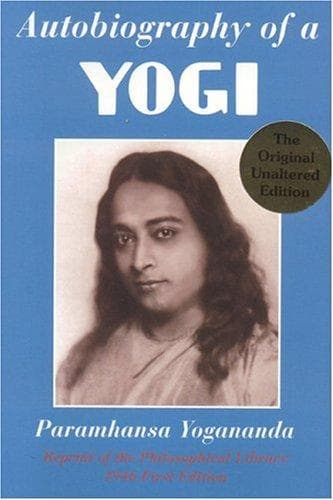
Yogananda, Paramahansa, 1893-1952; Yogis -- India -- Biography
“The distraught Babu left immediately for his home. He came back
shortly and handed Afzal the required sum.
“‘Go to the little bridge near your house,’ the FAKIR instructed
Babu. ‘Call on Hazrat to give you the watch and chain.’
“Babu rushed away. On his return, he was wearing a smile of relief
and no jewelry whatever.
“‘When I commanded Hazrat as directed,’ he announced, ‘my watch
came tumbling down from the air into my right hand! You may be sure
I locked the heirloom in my safe before rejoining the group here!’
“Babu’s friends, witnesses of the comicotragedy of the ransom for a
watch, were staring with resentment at Afzal. He now spoke placatingly.
“‘Please name any drink you want; Hazrat will produce it.’
“A number asked for milk, others for fruit juices. I was not too
much shocked when the unnerved Babu requested whisky! The Mohammedan
gave an order; the obliging Hazrat sent sealed containers sailing
down the air and thudding to the floor. Each man found his desired
beverage.
“The promise of the fourth spectacular feat of the day was doubtless
gratifying to our host: Afzal offered to supply an instantaneous
lunch!
“‘Let us order the most expensive dishes,’ Babu suggested gloomily.
‘I want an elaborate meal for my five hundred rupees! Everything
should be served on gold plates!’
“As soon as each man had expressed his preferences, the FAKIR addressed
himself to the inexhaustible Hazrat. A great rattle ensued; gold
platters filled with intricately-prepared curries, hot LUCHIS, and
many out-of-season fruits, landed from nowhere at our feet. All
the food was delicious. After feasting for an hour, we started to
leave the room. A tremendous noise, as though dishes were being
piled up, caused us to turn around. Lo! there was no sign of the
glittering plates or the remnants of the meal.”
“Guruji,” I interrupted, “if Afzal could easily secure such things
as gold dishes, why did he covet the property of others?”
“The FAKIR was not highly developed spiritually,” Sri Yukteswar
explained. “His mastery of a certain yoga technique gave him access
to an astral plane where any desire is immediately materialized.
Through the agency of an astral being, Hazrat, the Mohammedan could
summon the atoms of any object from etheric energy by an act of
powerful will. But such astrally-produced objects are structurally
evanescent; they cannot be long retained. Afzal still yearned for
worldly wealth which, though more hardly earned, has a more dependable
durability.”
I laughed. “It too sometimes vanishes most unaccountably!”
“Afzal was not a man of God-realization,” Master went on. “Miracles
of a permanent and beneficial nature are performed by true saints
because they have attuned themselves to the omnipotent Creator.
Afzal was merely an ordinary man with an extraordinary power of
penetrating a subtle realm not usually entered by mortals until
death.”
“I understand now, Guruji. The after-world appears to have some
charming features.”
Public-domain text, read in full here on John Shaqi.
Reviews
Reviews
No reviews yet
Be the first to share your thoughts on this work.
Elsewhere in the archive
Join the Discussion
Join the discussion
Sign in to leave a comment or review.
Sign InorCreate an account