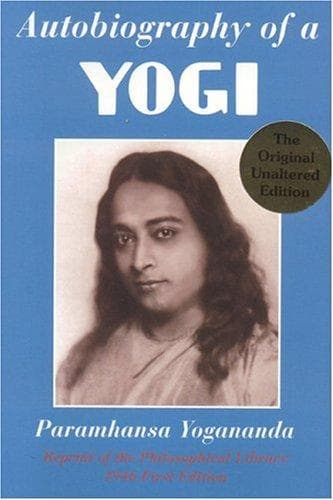
Yogananda, Paramahansa, 1893-1952; Yogis -- India -- Biography
I BECOME A MONK OF THE SWAMI ORDER
“Master, my father has been anxious for me to accept an executive
position with the Bengal-Nagpur Railway. But I have definitely
refused it.” I added hopefully, “Sir, will you not make me a monk of
the Swami Order?” I looked pleadingly at my guru. During preceding
years, in order to test the depth of my determination, he had
refused this same request. Today, however, he smiled graciously.
“Very well; tomorrow I will initiate you into swamiship.” He went
on quietly, “I am happy that you have persisted in your desire to
be a monk. Lahiri Mahasaya often said: ‘If you don’t invite God to
be your summer Guest, He won’t come in the winter of your life.’”
“Dear master, I could never falter in my goal to belong to the Swami
Order like your revered self.” I smiled at him with measureless
affection.
“He that is unmarried careth for the things that belong to the Lord,
how he may please the Lord: but he that is married careth for the
things of the world, how he may please his wife.” {FN24-1} I had
analyzed the lives of many of my friends who, after undergoing
certain spiritual discipline, had then married. Launched on the sea
of worldly responsibilities, they had forgotten their resolutions
to meditate deeply.
To allot God a secondary place in life was, to me, inconceivable.
Though He is the sole Owner of the cosmos, silently showering us
with gifts from life to life, one thing yet remains which He does
not own, and which each human heart is empowered to withhold or
bestow-man’s love. The Creator, in taking infinite pains to shroud
with mystery His presence in every atom of creation, could have had
but one motive-a sensitive desire that men seek Him only through
free will. With what velvet glove of every humility has He not
covered the iron hand of omnipotence!
The following day was one of the most memorable in my life. It
was a sunny Thursday, I remember, in July, 1914, a few weeks after
my graduation from college. On the inner balcony of his Serampore
hermitage, Master dipped a new piece of white silk into a dye of
ocher, the traditional color of the Swami Order. After the cloth
had dried, my guru draped it around me as a renunciate’s robe.
“Someday you will go to the West, where silk is preferred,” he said.
“As a symbol, I have chosen for you this silk material instead of
the customary cotton.”
In India, where monks embrace the ideal of poverty, a silk-clad
swami is an unusual sight. Many yogis, however, wear garments of
silk, which preserves certain subtle bodily currents better than
cotton.
“I am averse to ceremonies,” Sri Yukteswar remarked. “I will make
you a swami in the BIDWAT (non-ceremonious) manner.”
Public-domain text, read in full here on John Shaqi.
Reviews
Reviews
No reviews yet
Be the first to share your thoughts on this work.
Elsewhere in the archive
Join the Discussion
Join the discussion
Sign in to leave a comment or review.
Sign InorCreate an account