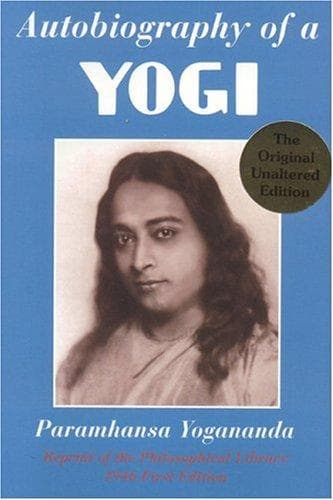
Yogananda, Paramahansa, 1893-1952; Yogis -- India -- Biography
{FN36-4} Literally, “eternal religion,” the name given to the body
of Vedic teachings. SANATAN DHARMA has come to be called HINDUISM
since the time of the Greeks who designated the people on the banks
of the river Indus as INDOOS, or HINDUS. The word HINDU, properly
speaking, refers only to followers of SANATAN DHARMA or Hinduism.
The term INDIAN applies equally to Hindus and Mohammedans and other
INHABITANTS of the soil of India (and also through the confusing
geographical error of Columbus, to the American Mongoloid aboriginals).
The ancient name for India is ARYAVARTA, literally, “abode of the
Aryans.” The Sanskrit root of ARYA is “worthy, holy, noble.” The
later ethnological misuse of ARYAN to signify not spiritual, but
physical, characteristics, led the great Orientalist, Max Muller,
to say quaintly: “To me an ethnologist who speaks of an Aryan
race, Aryan blood, Aryan eyes and hair, is as great a sinner as a
linguist who speaks of a dolichocephalic dictionary or a brachycephalic
grammar.”
{FN36-5} PARAM-GURU is literally “guru supreme” or “guru beyond,”
signifying a line or succession of teachers. Babaji, the GURU of
Lahiri Mahasaya, was the PARAM-GURU of Sri Yukteswar.
{FN36-6} My visit to Keshabananda’s ashram is described on pp.
405-408.
{FN36-7} September 26, 1895 is the date on which Lahiri Mahasaya left
his body. In a few more days he would have reached his sixty-eighth
birthday.
{FN36-8} Facing the north, and thrice revolving the body, are parts
of a Vedic rite used by masters who know beforehand when the final
hour is about to strike for the physical body. The last meditation,
during which the master merges himself in the Cosmic AUM, is called
the MAHA, or great, SAMADHI.
{FN36-9} Kabir was a great sixteenth-century saint whose large
following included both Hindus and Mohammedans. At the time of his
death, the disciples quarreled over the manner of conducting the
funeral ceremonies. The exasperated master rose from his final sleep,
and gave his instructions. “Half of my remains shall be buried by
the Moslem rites;” he said, “let the other half be cremated with
a Hindu sacrament.” He then vanished. When the disciples opened
the coffin which had contained his body, nothing was found but a
dazzling array of gold-colored champak flowers. Half of these were
obediently buried by the Moslems, who revere his shrine to this
day.
In his youth Kabir was approached by two disciples who wanted minute
intellectual guidance along the mystic path. The master responded
simply:
“Path presupposes distance;
If He be near, no path needest thou at all.
Verily it maketh me smile
To hear of a fish in water athirst!”
{FN36-10} Panchanon established, in a seventeen-acre garden
at Deogarh in Bihar, a temple containing a stone statue of Lahiri
Mahasaya. Another statue of the great master has been set by
disciples in the little parlor of his Benares home.
{FN36-11} I CORINTHIANS 15:54-55.
CHAPTER: 37
I GO TO AMERICA
Public-domain text, read in full here on John Shaqi.
Reviews
Reviews
No reviews yet
Be the first to share your thoughts on this work.
Elsewhere in the archive
Join the Discussion
Join the discussion
Sign in to leave a comment or review.
Sign InorCreate an account