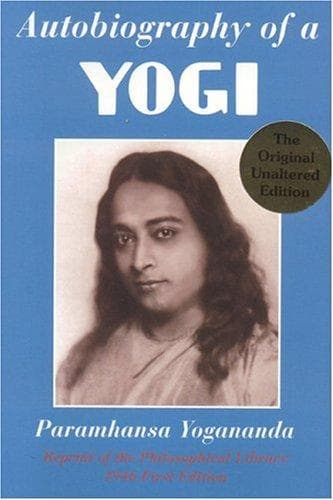
Yogananda, Paramahansa, 1893-1952; Yogis -- India -- Biography
I left India in August, 1920, on THE CITY OF SPARTA, the first
passenger boat sailing for America after the close of World War
I. I had been able to book passage only after the removal, in ways
fairly miraculous, of many “red-tape” difficulties concerned with
the granting of my passport.
During the two-months’ voyage a fellow passenger found out that I
was the Indian delegate to the Boston congress.
“Swami Yogananda,” he said, with the first of many quaint
pronunciations by which I was later to hear my name spoken by the
Americans, “please favor the passengers with a lecture next Thursday
night. I think we would all benefit by a talk on ‘The Battle of
Life and How to Fight It.’”
Alas! I had to fight the battle of my own life, I discovered on
Wednesday. Desperately trying to organize my ideas into a lecture
in English, I finally abandoned all preparations; my thoughts, like
a wild colt eyeing a saddle, refused any cooperation with the laws
of English grammar. Fully trusting in Master’s past assurances,
however, I appeared before my Thursday audience in the saloon of
the steamer. No eloquence rose to my lips; speechlessly I stood
before the assemblage. After an endurance contest lasting ten
minutes, the audience realized my predicament and began to laugh.
The situation was not funny to me at the moment; indignantly I sent
a silent prayer to Master.
“You CAN! Speak!” His voice sounded instantly within my consciousness.
My thoughts fell at once into a friendly relation with the English
language. Forty-five minutes later the audience was still attentive.
The talk won me a number of invitations to lecture later before
various groups in America.
I never could remember, afterward, a word that I had spoken. By
discreet inquiry I learned from a number of passengers: “You gave
an inspiring lecture in stirring and correct English.” At this
delightful news I humbly thanked my guru for his timely help,
realizing anew that he was ever with me, setting at naught all
barriers of time and space.
Once in awhile, during the remainder of the ocean trip, I experienced
a few apprehensive twinges about the coming English-lecture ordeal
at the Boston congress.
“Lord,” I prayed, “please let my inspiration be Thyself, and not
again the laughter-bombs of the audience!”
[Illustration: A group of delegates to the 1920 International
Congress of Religious Liberals at Boston, where I gave my maiden
speech in America. (Left to Right) Rev. Clay MacCauley, Rev. T.
Rhondda Williams, Prof. S. Ushigasaki, Rev. Jabez T. Sunderland,
myself, Rev. Chas. W. Wendte, Rev. Samuel A. Eliot, Rev. Basil
Martin, Rev. Christopher J. Street, Rev. Samuel M. Crothers.—see
congress.jpg]
Public-domain text, read in full here on John Shaqi.
Reviews
Reviews
No reviews yet
Be the first to share your thoughts on this work.
Elsewhere in the archive
Join the Discussion
Join the discussion
Sign in to leave a comment or review.
Sign InorCreate an account