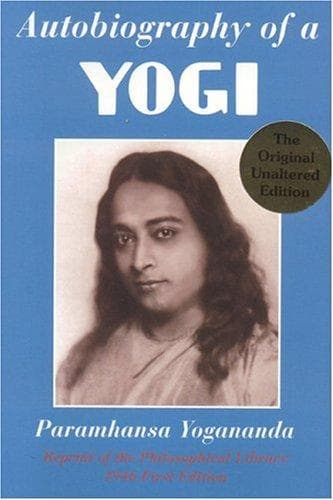
Yogananda, Paramahansa, 1893-1952; Yogis -- India -- Biography
“It is paper-thin, the size of a small coin.” She added, “I take
it for sacramental reasons; if it is unconsecrated, I am unable to
swallow it.”
“Certainly you could not have lived on that, for twelve whole
years?”
“I live by God’s light.” How simple her reply, how Einsteinian!
“I see you realize that energy flows to your body from the ether,
sun, and air.”
A swift smile broke over her face. “I am so happy to know you
understand how I live.”
“Your sacred life is a daily demonstration of the truth uttered by
Christ: ‘Man shall not live by bread alone, but by every word that
proceedeth out of the mouth of God.’” {FN39-3}
Again she showed joy at my explanation. “It is indeed so. One of
the reasons I am here on earth today is to prove that man can live
by God’s invisible light, and not by food only.”
“Can you teach others how to live without food?”
She appeared a trifle shocked. “I cannot do that; God does not wish
it.”
As my gaze fell on her strong, graceful hands, Therese showed me
a little, square, freshly healed wound on each of her palms. On
the back of each hand, she pointed out a smaller, crescent-shaped
wound, freshly healed. Each wound went straight through the hand.
The sight brought to my mind distinct recollection of the large
square iron nails with crescent-tipped ends, still used in the
Orient, but which I do not recall having seen in the West.
The saint told me something of her weekly trances. “As a helpless
onlooker, I observe the whole Passion of Christ.” Each week, from
Thursday midnight until Friday afternoon at one o’clock, her wounds
open and bleed; she loses ten pounds of her ordinary 121-pound
weight. Suffering intensely in her sympathetic love, Therese yet
looks forward joyously to these weekly visions of her Lord.
I realized at once that her strange life is intended by God to reassure
all Christians of the historical authenticity of Jesus’ life and
crucifixion as recorded in the New Testament, and to dramatically
display the ever-living bond between the Galilean Master and his
devotees.
Professor Wurz related some of his experiences with the saint.
“Several of us, including Therese, often travel for days on
sight-seeing trips throughout Germany,” he told me. “It is a striking
contrast-while we have three meals a day, Therese eats nothing.
She remains as fresh as a rose, untouched by the fatigue which the
trips cause us. As we grow hungry and hunt for wayside inns, she
laughs merrily.”
The professor added some interesting physiological details: “Because
Therese takes no food, her stomach has shrunk. She has no excretions,
but her perspiration glands function; her skin is always soft and
firm.”
At the time of parting, I expressed to Therese my desire to be
present at her trance.
“Yes, please come to Konnersreuth next Friday,” she said graciously.
“The bishop will give you a permit. I am very happy you sought me
out in Eichstatt.”
Public-domain text, read in full here on John Shaqi.
Reviews
Reviews
No reviews yet
Be the first to share your thoughts on this work.
Elsewhere in the archive
Join the Discussion
Join the discussion
Sign in to leave a comment or review.
Sign InorCreate an account