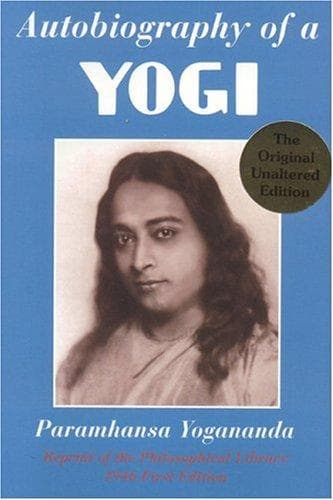
Yogananda, Paramahansa, 1893-1952; Yogis -- India -- Biography
My companion and I {FN41-1} were spending the month of November,
1935, as guests of the State of Mysore. The Maharaja, H.H.
Sri Krishnaraja Wadiyar IV, is a model prince with intelligent
devotion to his people. A pious Hindu, the Maharaja has empowered
a Mohammedan, the able Mirza Ismail, as his Dewan or Premier.
Popular representation is given to the seven million inhabitants
of Mysore in both an Assembly and a Legislative Council.
The heir to the Maharaja, H.H. the Yuvaraja, Sir Sri Krishna
Narasingharaj Wadiyar, had invited my secretary and me to visit
his enlightened and progressive realm. During the past fortnight
I had addressed thousands of Mysore citizens and students, at the
Town Hall, the Maharajah’s College, the University Medical School;
and three mass meetings in Bangalore, at the National High School,
the Intermediate College, and the Chetty Town Hall where over
three thousand persons had assembled. Whether the eager listeners
had been able to credit the glowing picture I drew of America,
I know not; but the applause had always been loudest when I spoke
of the mutual benefits that could flow from exchange of the best
features in East and West.
Mr. Wright and I were now relaxing in the tropical peace. His travel
diary gives the following account of his impressions of Mysore:
“Brilliantly green rice fields, varied by tasseled sugar cane
patches, nestle at the protective foot of rocky hills-hills dotting
the emerald panorama like excrescences of black stone-and the play
of colors is enhanced by the sudden and dramatic disappearance of
the sun as it seeks rest behind the solemn hills.
“Many rapturous moments have been spent in gazing, almost absent-mindedly,
at the ever-changing canvas of God stretched across the firmament,
for His touch alone is able to produce colors that vibrate with the
freshness of life. That youth of colors is lost when man tries to
imitate with mere pigments, for the Lord resorts to a more simple
and effective medium-oils that are neither oils nor pigments, but
mere rays of light. He tosses a splash of light here, and it reflects
red; He waves the brush again and it blends gradually into orange
and gold; then with a piercing thrust He stabs the clouds with a
streak of purple that leaves a ringlet or fringe of red oozing out
of the wound in the clouds; and so, on and on, He plays, night and
morning alike, ever-changing, ever-new, ever-fresh; no patterns,
no duplicates, no colors just the same. The beauty of the Indian
change in day to night is beyond compare elsewhere; often the sky
looks as if God had taken all the colors in His kit and given them
one mighty kaleidoscopic toss into the heavens.
Public-domain text, read in full here on John Shaqi.
Reviews
Reviews
No reviews yet
Be the first to share your thoughts on this work.
Elsewhere in the archive
Join the Discussion
Join the discussion
Sign in to leave a comment or review.
Sign InorCreate an account