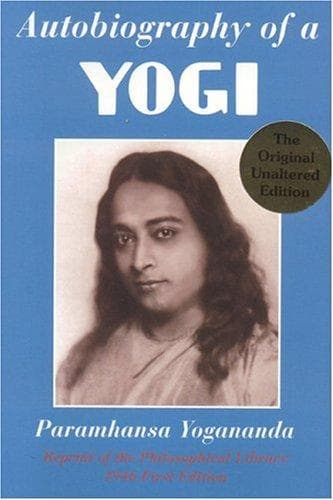
Yogananda, Paramahansa, 1893-1952; Yogis -- India -- Biography
We sat happily awhile in meditative silence. After we had left his
sacred presence, I said to Mr. Wright, “He is a king sitting on a
throne of golden straw.”
We had our dinner that night on the MELA grounds under the stars,
eating from leaf plates pinned together with sticks. Dishwashings
in India are reduced to a minimum!
Two more days of the fascinating KUMBHA; then northwest along the
Jumna banks to Agra. Once again I gazed on the Taj Mahal; in memory
Jitendra stood by my side, awed by the dream in marble. Then on to
the Brindaban ashram of Swami Keshabananda.
[Illustration: My companions and I pose before the “dream in marble,”
the Taj Mahal at Agra.—see taj.jpg]
My object in seeking out Keshabananda was connected with this book.
I had never forgotten Sri Yukteswar’s request that I write the life
of Lahiri Mahasaya. During my stay in India I was taking every
opportunity of contacting direct disciples and relatives of the
Yogavatar. Recording their conversations in voluminous notes, I
verified facts and dates, and collected photographs, old letters,
and documents. My Lahiri Mahasaya portfolio began to swell; I realized
with dismay that ahead of me lay arduous labors in authorship.
I prayed that I might be equal to my role as biographer of the
colossal guru. Several of his disciples feared that in a written
account their master might be belittled or misinterpreted.
“One can hardly do justice in cold words to the life of a divine
incarnation,” Panchanon Bhattacharya had once remarked to me.
Other close disciples were similarly satisfied to keep the Yogavatar
hidden in their hearts as the deathless preceptor. Nevertheless,
mindful of Lahiri Mahasaya’s prediction about his biography, I spared
no effort to secure and substantiate the facts of his outward life.
[Illustration: Mr. Wright and I pose with the venerable Swami
Keshabananda and a disciple at the stately hermitage in Brindaban—see
keshabananda.jpg]
Swami Keshabananda greeted our party warmly at Brindaban in his
Katayani Peith Ashram, an imposing brick building with massive
black pillars, set in a beautiful garden. He ushered us at once
into a sitting room adorned with an enlargement of Lahiri Mahasaya’s
picture. The swami was approaching the age of ninety, but his
muscular body radiated strength and health. With long hair and
a snow-white beard, eyes twinkling with joy, he was a veritable
patriarchal embodiment. I informed him that I wanted to mention
his name in my book on India’s masters.
“Please tell me about your earlier life.” I smiled entreatingly;
great yogis are often uncommunicative.
Public-domain text, read in full here on John Shaqi.
Reviews
Reviews
No reviews yet
Be the first to share your thoughts on this work.
Elsewhere in the archive
Join the Discussion
Join the discussion
Sign in to leave a comment or review.
Sign InorCreate an account