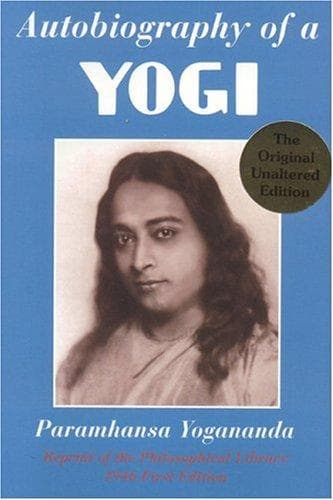
Yogananda, Paramahansa, 1893-1952; Yogis -- India -- Biography
“The cow to me means the entire sub-human world, extending man’s
sympathies beyond his own species,” the Mahatma has explained. “Man
through the cow is enjoined to realize his identity with all that
lives. Why the ancient rishis selected the cow for apotheosis is
obvious to me. The cow in India was the best comparison; she was
the giver of plenty. Not only did she give milk, but she also made
agriculture possible. The cow is a poem of pity; one reads pity in
the gentle animal. She is the second mother to millions of mankind.
Protection of the cow means protection of the whole dumb creation
of God. The appeal of the lower order of creation is all the more
forceful because it is speechless.”
Three daily rituals are enjoined on the orthodox Hindu. One is BHUTA
YAJNA, an offering of food to the animal kingdom. This ceremony
symbolizes man’s realization of his obligations to less evolved
forms of creation, instinctively tied to bodily identifications which
also corrode human life, but lacking in that quality of liberating
reason which is peculiar to humanity. BHUTA YAJNA thus reinforces
man’s readiness to succor the weak, as he in turn is comforted by
countless solicitudes of higher unseen beings. Man is also under
bond for rejuvenating gifts of nature, prodigal in earth, sea, and
sky. The evolutionary barrier of incommunicability among nature,
animals, man, and astral angels is thus overcome by offices of
silent love.
The other two daily YAJNAS are PITRI and NRI. PITRI YAJNA is an offering
of oblations to ancestors, as a symbol of man’s acknowledgment of
his debt to the past, essence of whose wisdom illumines humanity
today. NRI YAJNA is an offering of food to strangers or the poor,
symbol of the present responsibilities of man, his duties to
contemporaries.
In the early afternoon I fulfilled a neighborly NRI YAJNA by a
visit to Gandhi’s ashram for little girls. Mr. Wright accompanied
me on the ten-minute drive. Tiny young flowerlike faces atop the
long-stemmed colorful SARIS! At the end of a brief talk in Hindi
{FN44-7} which I was giving outdoors, the skies unloosed a sudden
downpour. Laughing, Mr. Wright and I climbed aboard the car and
sped back to MAGANVADI amidst sheets of driving silver. Such tropical
intensity and splash!
Reentering the guest house I was struck anew by the stark simplicity
and evidences of self-sacrifice which are everywhere present.
The Gandhi vow of non-possession came early in his married life.
Renouncing an extensive legal practice which had been yielding him
an annual income of more than $20,000, the Mahatma dispersed all
his wealth to the poor.
Sri Yukteswar used to poke gentle fun at the commonly inadequate
conceptions of renunciation.
“A beggar cannot renounce wealth,” Master would say. “If a man laments:
‘My business has failed; my wife has left me; I will renounce all
and enter a monastery,’ to what worldly sacrifice is he referring?
He did not renounce wealth and love; they renounced him!”
Public-domain text, read in full here on John Shaqi.
Reviews
Reviews
No reviews yet
Be the first to share your thoughts on this work.
Elsewhere in the archive
Join the Discussion
Join the discussion
Sign in to leave a comment or review.
Sign InorCreate an account