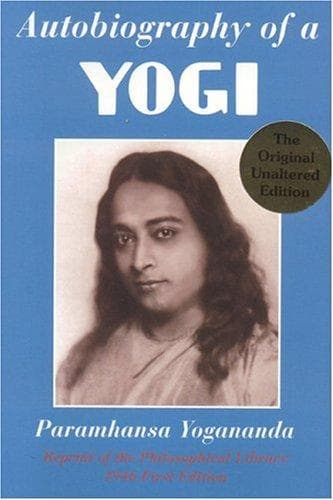
Yogananda, Paramahansa, 1893-1952; Yogis -- India -- Biography
“I have met a Christlike saint. Let us visit him in Serampore.”
And so the “bird” prepared to “swoop” perilously close to Calcutta!
{FN10-1} SANSKRITA, polished; complete. Sanskrit is the eldest
sister of all Indo-European tongues. Its alphabetical script is
DEVANAGARI, literally “divine abode.” “Who knows my grammar knows
God!” Panini, great philologist of ancient India, paid this tribute
to the mathematical and psychological perfection in Sanskrit. He
who would track language to its lair must indeed end as omniscient.
{FN10-2} He was not Jatinda (Jotin Ghosh), who will be remembered
for his timely aversion to tigers!
{FN10-3} Path or preliminary road to God.
{FN10-4} Hindu scriptures teach that family attachment is delusive
if it prevents the devotee from seeking the Giver of all boons,
including the one of loving relatives, not to mention life itself.
Jesus similarly taught: “Who is my mother? and who are my brethren?”
(MATTHEW 12:48.)
{FN10-5} JI is a customary respectful suffix, particularly used
in direct address; thus “swamiji,” “guruji,” “Sri Yukteswarji,”
“paramhansaji.”
{FN10-6} Pertaining to the SHASTRAS, literally, “sacred books,”
comprising four classes of scripture: the SHRUTI, SMRITI, PURANA,
and TANTRA. These comprehensive treatises cover every aspect
of religious and social life, and the fields of law, medicine,
architecture, art, etc. The SHRUTIS are the “directly heard” or
“revealed” scriptures, the VEDAS. The SMRITIS or “remembered” lore
was finally written down in a remote past as the world’s longest
epic poems, the MAHABHARATA and the RAMAYANA. PURANAS are literally
“ancient” allegories; TANTRAS literally mean “rites” or “rituals”;
these treatises convey profound truths under a veil of detailed
symbolism.
{FN10-7} “Divine teacher,” the customary Sanskrit term for one’s
spiritual preceptor. I have rendered it in English as simply
“Master.”
CHAPTER: 11
TWO PENNILESS BOYS IN BRINDABAN
“It would serve you right if Father disinherited you, Mukunda! How
foolishly you are throwing away your life!” An elder-brother sermon
was assaulting my ears.
Jitendra and I, fresh from the train (a figure of speech merely;
we were covered with dust), had just arrived at the home of Ananta,
recently transferred from Calcutta to the ancient city of Agra.
Brother was a supervising accountant for the Bengal-Nagpur Railway.
“You well know, Ananta, I seek my inheritance from the Heavenly
Father.”
“Money first; God can come later! Who knows? Life may be too long.”
“God first; money is His slave! Who can tell? Life may be too
short.”
My retort was summoned by the exigencies of the moment, and held
no presentiment. Yet the leaves of time unfolded to early finality
for Ananta; a few years later {FN11-1} he entered the land where
bank notes avail neither first nor last.
Public-domain text, read in full here on John Shaqi.
Reviews
Reviews
No reviews yet
Be the first to share your thoughts on this work.
Elsewhere in the archive
Join the Discussion
Join the discussion
Sign in to leave a comment or review.
Sign InorCreate an account