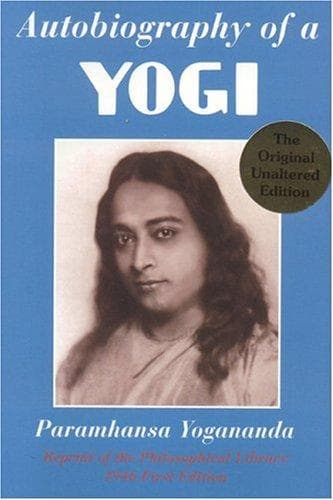
Yogananda, Paramahansa, 1893-1952; Yogis -- India -- Biography
Sri Yukteswar affected me similarly. If I entered the hermitage in
a worried or indifferent frame of mind, my attitude imperceptibly
changed. A healing calm descended at mere sight of my guru. Every
day with him was a new experience in joy, peace, and wisdom. Never
did I find him deluded or intoxicated with greed or emotion or
anger or any human attachment.
“The darkness of MAYA is silently approaching. Let us hie homeward
within.” With these words at dusk Master constantly reminded his
disciples of their need for KRIYA YOGA. A new student occasionally
expressed doubts regarding his own worthiness to engage in yoga
practice.
“Forget the past,” Sri Yukteswar would console him. “The vanished
lives of all men are dark with many shames. Human conduct is ever
unreliable until anchored in the Divine. Everything in future will
improve if you are making a spiritual effort now.”
Master always had young CHELAS {FN12-13} in his hermitage. Their
spiritual and intellectual education was his lifelong interest:
even shortly before he passed on, he accepted for training two
six-year-old boys and one youth of sixteen. He directed their minds
and lives with that careful discipline in which the word “disciple”
is etymologically rooted. The ashram residents loved and revered
their guru; a slight clap of his hands sufficed to bring them
eagerly to his side. When his mood was silent and withdrawn, no one
ventured to speak; when his laugh rang jovially, children looked
upon him as their own.
Master seldom asked others to render him a personal service, nor would
he accept help from a student unless the willingness were sincere.
My guru quietly washed his clothes if the disciples overlooked that
privileged task. Sri Yukteswar wore the traditional ocher-colored
swami robe; his laceless shoes, in accordance with yogi custom,
were of tiger or deer skin.
Master spoke fluent English, French, Hindi, and Bengali; his
Sanskrit was fair. He patiently instructed his young disciples by
certain short cuts which he had ingeniously devised for the study
of English and Sanskrit.
Master was cautious of his body, while withholding solicitous
attachment. The Infinite, he pointed out, properly manifests through
physical and mental soundness. He discountenanced any extremes. A
disciple once started a long fast. My guru only laughed: “Why not
throw the dog a bone?”
Sri Yukteswar’s health was excellent; I never saw him unwell.
{FN12-14} He permitted students to consult doctors if it seemed
advisable. His purpose was to give respect to the worldly custom:
“Physicians must carry on their work of healing through God’s laws
as applied to matter.” But he extolled the superiority of mental
therapy, and often repeated: “Wisdom is the greatest cleanser.”
Public-domain text, read in full here on John Shaqi.
Reviews
Reviews
No reviews yet
Be the first to share your thoughts on this work.
Elsewhere in the archive
Join the Discussion
Join the discussion
Sign in to leave a comment or review.
Sign InorCreate an account