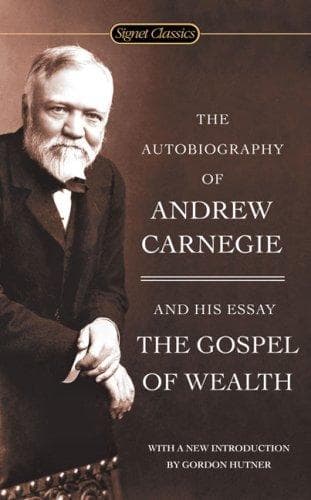
Carnegie, Andrew, 1835-1919; Industrialists -- United States -- Biography; Philanthropists -- United States -- Biography
He was very anxious to have us purchase land upon the Pennsylvania
Railroad, as his first thought was always for that company. This would
have given the Pennsylvania a monopoly of our traffic. When he visited
Pittsburgh a few months later and Mr. Robert Pitcairn, my successor as
superintendent of the Pittsburgh Division of the Pennsylvania, pointed
out to him the situation of the new works at Braddock's Station, which
gave us not only a connection with his own line, but also with the
rival Baltimore and Ohio line, and with a rival in one respect greater
than either--the Ohio River--he said, with a twinkle of his eye to
Robert, as Robert told me:
"Andy should have located his works a few miles farther east." But Mr.
Thomson knew the good and sufficient reasons which determined the
selection of the unrivaled site.
The works were well advanced when the financial panic of September,
1873, came upon us. I then entered upon the most anxious period of my
business life. All was going well when one morning in our summer
cottage, in the Allegheny Mountains at Cresson, a telegram came
announcing the failure of Jay Cooke & Co. Almost every hour after
brought news of some fresh disaster. House after house failed. The
question every morning was which would go next. Every failure depleted
the resources of other concerns. Loss after loss ensued, until a total
paralysis of business set in. Every weak spot was discovered and
houses that otherwise would have been strong were borne down largely
because our country lacked a proper banking system.
We had not much reason to be anxious about our debts. Not what we had
to pay of our own debts could give us much trouble, but rather what we
might have to pay for our debtors. It was not our bills payable but
our bills receivable which required attention, for we soon had to
begin meeting both. Even our own banks had to beg us not to draw upon
our balances. One incident will shed some light upon the currency
situation. One of our pay-days was approaching. One hundred thousand
dollars in small notes were absolutely necessary, and to obtain these
we paid a premium of twenty-four hundred dollars in New York and had
them expressed to Pittsburgh. It was impossible to borrow money, even
upon the best collaterals; but by selling securities, which I had in
reserve, considerable sums were realized--the company undertaking to
replace them later.
It happened that some of the railway companies whose lines centered in
Pittsburgh owed us large sums for material furnished--the Fort Wayne
road being the largest debtor. I remember calling upon Mr. Thaw, the
vice-president of the Fort Wayne, and telling him we must have our
money. He replied:
"You ought to have your money, but we are not paying anything these
days that is not protestable."
"Very good," I said, "your freight bills are in that category and we
shall follow your excellent example. Now I am going to order that we
do not pay you one dollar for freight."
Public-domain text, read in full here on John Shaqi.
Reviews
Reviews
No reviews yet
Be the first to share your thoughts on this work.
Elsewhere in the archive
Join the Discussion
Join the discussion
Sign in to leave a comment or review.
Sign InorCreate an account