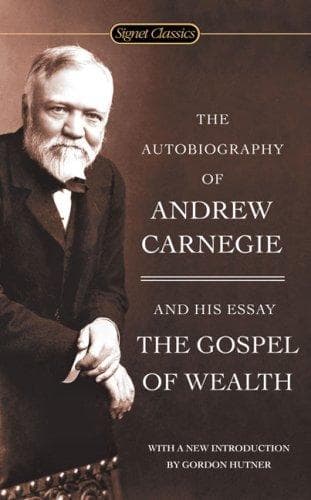
Carnegie, Andrew, 1835-1919; Industrialists -- United States -- Biography; Philanthropists -- United States -- Biography
After Mr. Kloman had passed through the bankruptcy court and was again
free, we offered him a ten per cent interest in our business, charging
for it only the actual capital invested, with nothing whatever for
good-will. This we were to carry for him until the profits paid for
it. We were to charge interest only on the cost, and he was to assume
no responsibility. The offer was accompanied by the condition that he
should not enter into any other business or endorse for others, but
give his whole time and attention to the mechanical and not the
business management of the mills. Could he have been persuaded to
accept this, he would have been a multimillionaire; but his pride, and
more particularly that of his family, perhaps, would not permit this.
He would go into business on his own account, and, notwithstanding
the most urgent appeals on my part, and that of my colleagues, he
persisted in the determination to start a new rival concern with his
sons as business managers. The result was failure and premature death.
How foolish we are not to recognize what we are best fitted for and
can perform, not only with ease but with pleasure, as masters of the
craft. More than one able man I have known has persisted in blundering
in an office when he had great talent for the mill, and has worn
himself out, oppressed with cares and anxieties, his life a continual
round of misery, and the result at last failure. I never regretted
parting with any man so much as Mr. Kloman. His was a good heart, a
great mechanical brain, and had he been left to himself I believe he
would have been glad to remain with us. Offers of capital from
others--offers which failed when needed--turned his head, and the
great mechanic soon proved the poor man of affairs.[33]
[Footnote 33: Long after the circumstances here recited, Mr. Isidor
Straus called upon Mr. Henry Phipps and asked him if two statements
which had been publicly made about Mr. Carnegie and his partners in
the steel company were true. Mr. Phipps replied they were not. Then
said Mr. Straus:
"Mr. Phipps, you owe it to yourself and also to Mr. Carnegie to say so
publicly."
This Mr. Phipps did in the _New York Herald_, January 30, 1904, in the
following handsome manner and without Mr. Carnegie's knowledge:
_Question:_ "In a recent publication mention was made of Mr.
Carnegie's not having treated Mr. Miller, Mr. Kloman, and yourself
properly during your early partnership, and at its termination. Can
you tell me anything about this?"
_Answer:_ "Mr. Miller has already spoken for himself in this matter,
and I can say that the treatment received from Mr. Carnegie during our
partnership, so far as I was concerned, was always fair and liberal.
"My association with Mr. Kloman in business goes back forty-three
years. Everything in connection with Mr. Carnegie's partnership with
Mr. Kloman was of a pleasant nature.
Public-domain text, read in full here on John Shaqi.
Reviews
Reviews
No reviews yet
Be the first to share your thoughts on this work.
Elsewhere in the archive
Join the Discussion
Join the discussion
Sign in to leave a comment or review.
Sign InorCreate an account