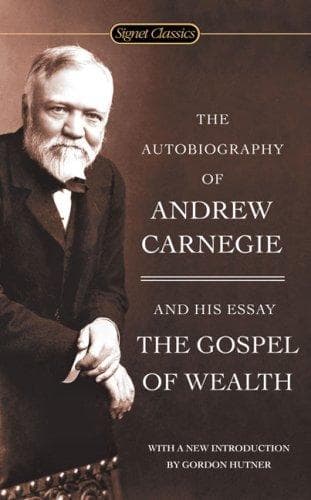
Carnegie, Andrew, 1835-1919; Industrialists -- United States -- Biography; Philanthropists -- United States -- Biography
"If this is the concern we own shares in, won't you please sell them
before you return to the office this afternoon?"
He saw no need for haste. It would be done in good time.
"No, Harry, oblige me by doing it instantly."
He did so and had it transferred. Fortunate, indeed, was this, for in
a short time the bank failed with an enormous deficit. My cousin, Mr.
Morris, was among the ruined shareholders. Many others met the same
fate. Times were panicky, and had we been individually liable for all
the debts of the National Trust Company our credit would inevitably
have been seriously imperiled. It was a narrow escape. And with only
twenty shares (two thousand dollars' worth of stock), taken to oblige
friends who wished our name on their list of shareholders! The lesson
was not lost. The sound rule in business is that you may give money
freely when you have a surplus, but your name never--neither as
endorser nor as member of a corporation with individual liability. A
trifling investment of a few thousand dollars, a mere trifle--yes, but
a trifle possessed of deadly explosive power.
The rapid substitution of steel for iron in the immediate future had
become obvious to us. Even in our Keystone Bridge Works, steel was
being used more and more in place of iron. King Iron was about to be
deposed by the new King Steel, and we were becoming more and more
dependent upon it. We had about concluded in 1886 to build alongside
of the Edgar Thomson Mills new works for the manufacture of
miscellaneous shapes of steel when it was suggested to us that the
five or six leading manufacturers of Pittsburgh, who had combined to
build steel mills at Homestead, were willing to sell their mills to
us.
These works had been built originally by a syndicate of manufacturers,
with the view of obtaining the necessary supplies of steel which they
required in their various concerns, but the steel-rail business, being
then in one of its booms, they had been tempted to change plans and
construct a steel-rail mill. They had been able to make rails as long
as prices remained high, but, as the mills had not been specially
designed for this purpose, they were without the indispensable blast
furnaces for the supply of pig iron, and had no coke lands for the
supply of fuel. They were in no condition to compete with us.
Public-domain text, read in full here on John Shaqi.
Reviews
Reviews
No reviews yet
Be the first to share your thoughts on this work.
Elsewhere in the archive
Join the Discussion
Join the discussion
Sign in to leave a comment or review.
Sign InorCreate an account