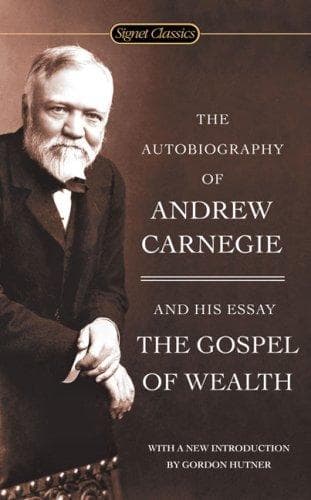
Carnegie, Andrew, 1835-1919; Industrialists -- United States -- Biography; Philanthropists -- United States -- Biography
"I have a good woman for wife who manages well. We go into Pittsburgh
every fourth Saturday afternoon and buy our supplies wholesale for the
next month and save one third. Not many of your men can do this.
Shopkeepers here charge so much. And another thing, they charge very
high for coal. If you paid your men every two weeks, instead of
monthly, it would be as good for the careful men as a raise in wages
of ten per cent or more."
"Mr. Edwards, that shall be done," I replied.
It involved increased labor and a few more clerks, but that was a
small matter. The remark about high prices charged set me to thinking
why the men could not open a cooeperative store. This was also
arranged--the firm agreeing to pay the rent of the building, but
insisting that the men themselves take the stock and manage it. Out of
that came the Braddock's Cooeperative Society, a valuable institution
for many reasons, not the least of them that it taught the men that
business had its difficulties.
The coal trouble was cured effectively by our agreeing that the
company sell all its men coal at the net cost price to us (about half
of what had been charged by coal dealers, so I was told) and arranging
to deliver it at the men's houses--the buyer paying only actual cost
of cartage.
There was another matter. We found that the men's savings caused them
anxiety, for little faith have the prudent, saving men in banks and,
unfortunately, our Government at that time did not follow the British
in having post-office deposit banks. We offered to take the actual
savings of each workman, up to two thousand dollars, and pay six per
cent interest upon them, to encourage thrift. Their money was kept
separate from the business, in a trust fund, and lent to such as
wished to build homes for themselves. I consider this one of the best
things that can be done for the saving workman.
It was such concessions as these that proved the most profitable
investments ever made by the company, even from an economical
standpoint. It pays to go beyond the letter of the bond with your men.
Two of my partners, as Mr. Phipps has put it, "knew my extreme
disposition to always grant the demands of labor, however
unreasonable," but looking back upon my failing in this respect, I
wish it had been greater--much greater. No expenditure returned such
dividends as the friendship of our workmen.
Public-domain text, read in full here on John Shaqi.
Reviews
Reviews
No reviews yet
Be the first to share your thoughts on this work.
Elsewhere in the archive
Join the Discussion
Join the discussion
Sign in to leave a comment or review.
Sign InorCreate an account