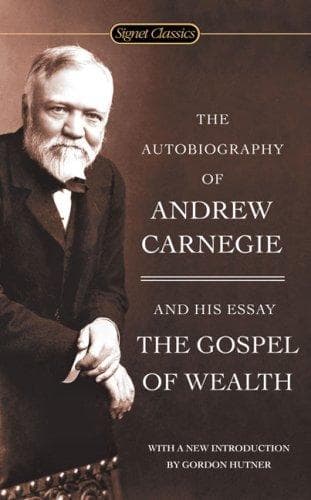
Carnegie, Andrew, 1835-1919; Industrialists -- United States -- Biography; Philanthropists -- United States -- Biography
This fund is very near and dear to me--knowing, as I do, many who are
soon to become beneficiaries, and convinced as I am of their worth and
the value of the service already rendered by them. Of all professions,
that of teaching is probably the most unfairly, yes, most meanly paid,
though it should rank with the highest. Educated men, devoting their
lives to teaching the young, receive mere pittances. When I first took
my seat as a trustee of Cornell University, I was shocked to find how
small were the salaries of the professors, as a rule ranking below the
salaries of some of our clerks. To save for old age with these men is
impossible. Hence the universities without pension funds are compelled
to retain men who are no longer able, should no longer be required, to
perform their duties. Of the usefulness of the fund no doubt can be
entertained.[48] The first list of beneficiaries published was
conclusive upon this point, containing as it did several names of
world-wide reputation, so great had been their contributions to the
stock of human knowledge. Many of these beneficiaries and their widows
have written me most affecting letters. These I can never destroy, for
if I ever have a fit of melancholy, I know the cure lies in re-reading
these letters.
[Footnote 48: The total amount of this fund in 1919 was $29,250,000.]
My friend, Mr. Thomas Shaw (now Lord Shaw), of Dunfermline had written
an article for one of the English reviews showing that many poor
people in Scotland were unable to pay the fees required to give their
children a university education, although some had deprived themselves
of comforts in order to do so. After reading Mr. Shaw's article the
idea came to me to give ten millions in five per cent bonds, one half
of the L104,000 yearly revenue from it to be used to pay the fees of
the deserving poor students and the other half to improve the
universities.
The first meeting of the trustees of this fund (The Carnegie Trust for
the Universities of Scotland) was held in the Edinburgh office of the
Secretary of State for Scotland in 1902, Lord Balfour of Burleigh
presiding. It was a notable body of men--Prime Minister Balfour, Sir
Henry Campbell-Bannerman (afterwards Prime Minister), John Morley (now
Viscount Morley), James Bryce (now Viscount Bryce), the Earl of Elgin,
Lord Rosebery, Lord Reay, Mr. Shaw (now Lord Shaw), Dr. John Ross of
Dunfermline, "the man-of-all-work" that makes for the happiness or
instruction of his fellow-man, and others. I explained that I had
asked them to act because I could not entrust funds to the faculties
of the Scottish universities after reading the report of a recent
commission. Mr. Balfour promptly exclaimed: "Not a penny, not a
penny!" The Earl of Elgin, who had been a member of the commission,
fully concurred.
[Illustration: ANDREW CARNEGIE AND VISCOUNT BRYCE]
Public-domain text, read in full here on John Shaqi.
Reviews
Reviews
No reviews yet
Be the first to share your thoughts on this work.
Elsewhere in the archive
Join the Discussion
Join the discussion
Sign in to leave a comment or review.
Sign InorCreate an account