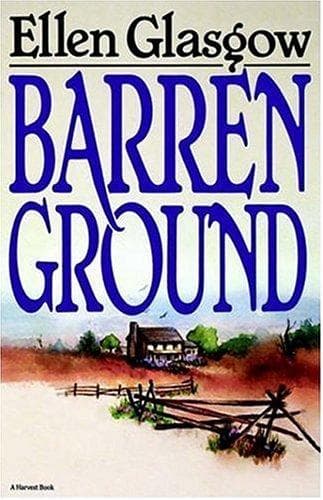
Country life -- Fiction; Pastoral fiction; Piedmont (U.S. : Region) -- Fiction; Virginia -- Fiction
Mr. Kettledrum was regretful but reassuring. "It's always better to
provide something when you set out," he remarked. "An empty stomach
ain't a good travellin' companion; but it's likely enough that the
conductor can git you a bite at one of the stops. Along up the road, at
the junction, thar's generally some niggers with fried chicken legs; but
all the same it's safer to take along a snack when you're goin' to
travel far."
They were passing the fork of the road. Over the big gate she could see
the ample sweep of the meadows, greenish-grey under the drizzle of rain;
and beyond Gooseneck Creek, the roof and chimneys of Five Oaks made a
red wound in the sky. Seen through the cleft of the trees, the whole
place wore a furtive and hostile air. How miserable the fields looked on
a wet day, miserable and yet as if they were trying to keep up an
appearance. Some natural melancholy in the scene drifted through her
mind and out again into the landscape. She felt anew her kinship with
the desolation and with the rain that fell, fine and soft as mist, over
it all. Even when she went away she would carry a part of it with her.
"That's what life is for most people, I reckon," she thought drearily.
"Just barren ground where they have to struggle to make anything grow."
"Now, I've never been as far as New York," Mr. Kettledrum was saying in
a sprightly manner. "But from all accounts it must be a fine city. My
brother John's son Harry has lived there for fifteen years. He's got a
job with some wholesale grocers--Bartlett and Tribble. If you run across
him while you're there, be sure to tell him who you are. He'll be glad
of a word from his old uncle. Don't forget the name. Bartlett and
Tribble. They've stores all over the town, Harry says. You can't
possibly miss them."
They had reached the Sneads' pasture, deserted at this early hour except
for a mare and her colt. A minute later they passed the square brick
house, where the cows were trailing slowly across the lawn in the
direction of the bars which a small coloured boy was lowering. Then came
the mile of bad road, broken by mud holes. On they spun into the thin
woods and out again to the long slope. At the farm her mother was
calling her. There was the smell of frying bacon in the kitchen. Her
father was coming in from the stable. Rufus was slouching into his chair
with a yawn. Steam was pouring from the spout of the big tin coffee-pot
on the table. The glint of light on the stove and the walls. Rambler.
Flossie. . . . She remembered that she had eaten nothing. Hunger seized
her, and worse than hunger, the longing to burst into tears.
"Wall, here we are. The train's blowing now down at the next station.
You've plenty of time to take it easy while I unhitch the mare." He
helped her to alight, and then, picking up her bag, carried it down to
the track. "You jest stand here whar the train stops," he said. "I'll
take the mare out and be back in a jiffy. You've got your ticket ready,
I reckon?"
Public-domain text, read in full here on John Shaqi.
Reviews
Reviews
No reviews yet
Be the first to share your thoughts on this work.
Elsewhere in the archive
Join the Discussion
Join the discussion
Sign in to leave a comment or review.
Sign InorCreate an account