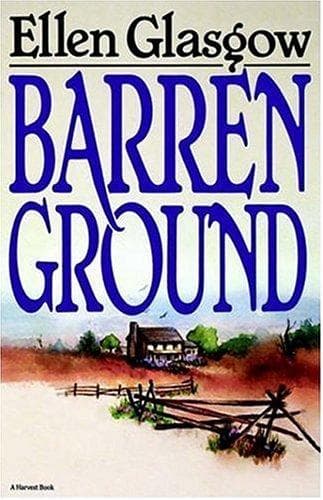
Country life -- Fiction; Pastoral fiction; Piedmont (U.S. : Region) -- Fiction; Virginia -- Fiction
"Yes, I know. I suppose the truth is that life doesn't seem to me to be
worth all the fuss they make over it. The more they suffer, the harder
they appear to cling to living. I believe in facing what you have to
face and making as little fuss about it as possible."
"I've noticed that. You hate fussiness."
She assented gravely. "When you've been very poor, you realize that it
is the greatest extravagance."
"You've been very poor, then?"
"Almost everybody is poor at Pedlar's Mill. The Ellgoods are the only
people who have prospered. The rest of us have had to wring whatever
we've had out of barren ground. It was a struggle to make anything
grow."
"Well, your face gives you away," he said thoughtfully. "Any nerve
specialist could tell you that you are made up of contradictions. You've
got the most romantic eyes I ever saw--they are as deep as an autumn
twilight--and the sternest mouth. Your eyes are gentle and your mouth is
hard--too hard, if you don't mind my saying so."
"Oh, I don't mind. People say we make our mouths. I heard Doctor Faraday
tell a woman that a few days ago. But it isn't true. Life makes us and
breaks us. We don't make life. The best we can do is to bear it."
"And you do that jolly well."
She did not smile as she answered. "Oh, I'm satisfied. I'm not
unhappy--except in spots," she corrected herself.
"Yet you have very little pleasure. You never go out."
"Yes, I do--sometimes. Every now and then Mrs. Faraday takes me to the
theatre."
"Do you ever go to hear music?"
"No, Mrs. Faraday doesn't care for it." She laughed. "The best I've ever
heard was a band in the street."
For an instant he hesitated, and she wondered what was coming. Then he
said persuasively: "There's a good concert to-morrow. Would you care to
come?"
She glanced at him inquiringly. "Sunday afternoon?"
"Yes, there's this new pianist, Krause. You aren't too pious, are you?"
"I'm not pious at all." A satirical memory sifted through her mind, and
she heard her own voice saying, "Will you let her die without giving her
time to prepare?"
"Then I'll come for you at half-past two. We'll hear the concert, and
then have tea somewhere, or a stroll in the Park."
When he had gone, she put the office in order, and then waited until the
last patient should leave. After all, why shouldn't she try to find some
pleasure in life? Her hesitation had come, she felt, from a nervous
avoidance of crowds, a shrinking from any change in her secluded manner
of living. She hummed a line from one of the Gospel hymns. "Rescue the
perishing, care for the dying."
"How ignorant he will think me when he discovers I have never heard any
music. I am ignorant, yet I am educated compared to what I was two years
ago. I know life now, and that is a great deal."
The patient came out and left, and in a few minutes Doctor Faraday
passed through the room on his way to put on his overcoat.
Public-domain text, read in full here on John Shaqi.
Reviews
Reviews
No reviews yet
Be the first to share your thoughts on this work.
Elsewhere in the archive
Join the Discussion
Join the discussion
Sign in to leave a comment or review.
Sign InorCreate an account